
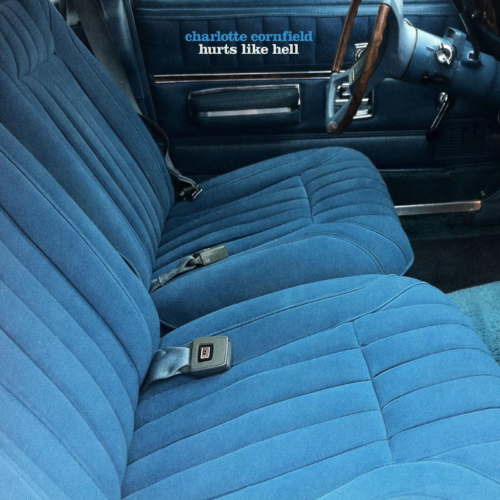
A brushed snare comes in soft, almost late, under a thin acoustic figure, and Charlotte Cornfield is already mid-thought by the time you catch up. No lead-in. Just a voice that sounds like it’s picking up something it’s been circling for a while. The band stays out of the way at first, then edges closer, pedal steel sliding in and out of the gaps like it’s testing the temperature.
It never really locks into place after that. The songs hold together, but they shift internally, small timing changes, parts arriving a fraction early or late, harmonies that don’t quite settle before moving again. You can hear people listening to each other in real time. Not aiming for tightness. Aiming for something that feels right in the moment.
The title track leans into that looseness. Mid-tempo, nothing pushed, guitars sitting just above a whisper. Then the vocal climbs, not dramatically, just enough to tighten everything around it. It changes the weight of the song without changing the volume. The harmonies follow, brushing up against the lead rather than stacking neatly behind it, like they’re part of the same thought instead of decoration.
Those kinds of decisions keep showing up. A piano that avoids the obvious notes and leaves space in the middle of the chord. Drums that drop out when they should anchor the section, then return in a slightly different shape. It doesn’t feel arranged so much as negotiated.
Living With It pulls a little harder on the rhythm. The verses sit exposed, guitar and voice doing most of the work, then the chorus opens just enough, a low-end pulse, a faint wash of synth, nothing that pushes it into something bigger, just a shift in footing. Feist’s voice slips in alongside hers, not quite harmony, not quite echo, more like a second thought running in parallel. The vocal stretches, then pulls back, like it’s trying out different ways of saying the same thing and not settling on one.
Lucky goes the other way. Louder, fuller, more direct. The drums hit with more certainty, the guitars fill in the edges, and suddenly everything feels a bit fixed. It’s not a bad track, it just lands differently, like the room got smaller and no one noticed until it was already moving.
The record is more convincing when it leaves space. Kitchen barely holds onto anything at all, high-string acoustic patterns, a piano that feels like it might stop at any second, no bass tying it down. The whole thing lifts without trying to. You start listening for what isn’t there as much as what is.
You can hear the band adjusting to that space. Guitar lines hesitate before resolving. Harmonies come in slightly off, then correct themselves. Nothing feels locked. That tension sits under even the quieter songs.
Squiddd drifts along on a loose groove, guitars with just enough shimmer to keep things moving, rhythm section holding it together without tightening it. The vocal leans into that instability, occasionally cracking, occasionally pulling away from the centre of the melody. It feels like it could slip out of its own structure and keep going.
Number keeps things simple on paper, acoustic guitar, a steady progression, a few background voices, but the phrasing keeps shifting around the beat. Lines run longer than they should, then stop short the next time through. The melody doesn’t sit still long enough to feel predictable.
Toward the end, Long Game opens up slightly, drums rolling under the surface, guitars weaving in and out without drawing attention to themselves. Then Bloody and Alive pulls everything back in, piano and voice at the centre, the rest of the band staying just far enough away to leave it exposed. It doesn’t build in any obvious way. It just sits there, getting heavier without getting louder.
Hurts Like Hell is out now via Next Door Records in Canada and Merge Records worldwide.
Photo – Colin Medley
Share this :


