
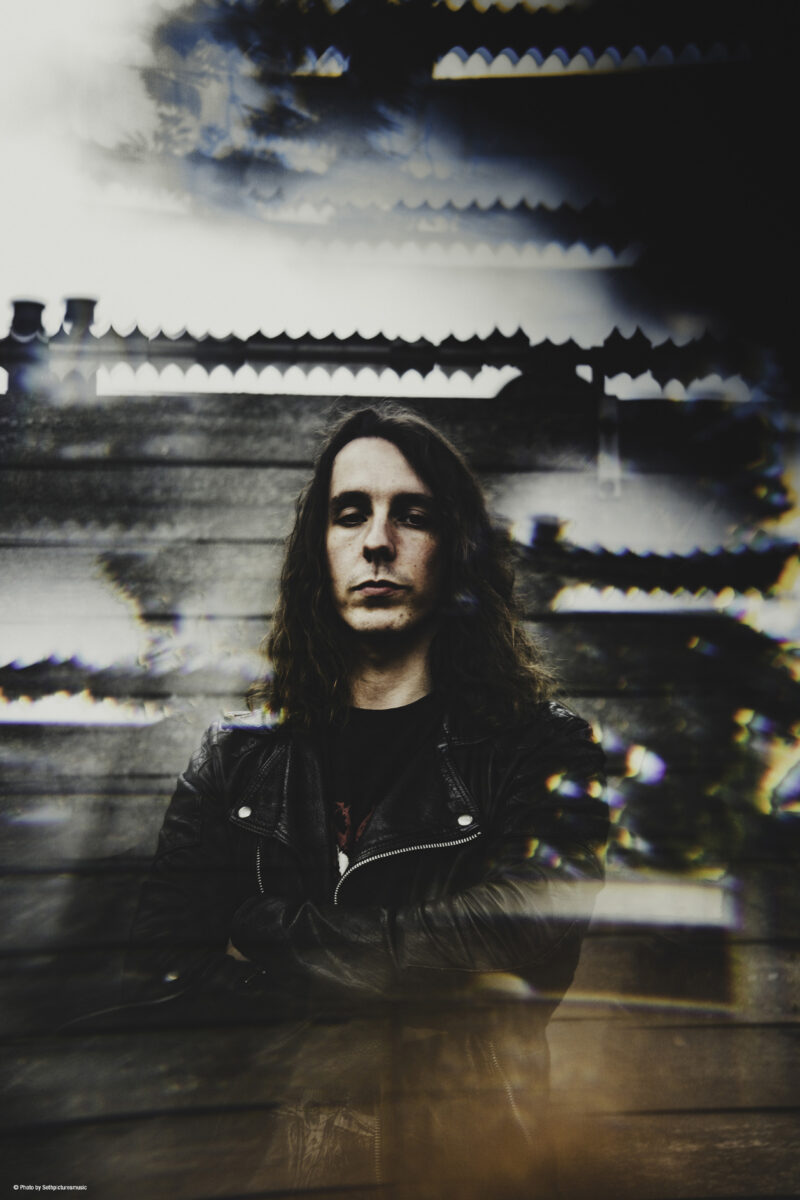
James McBain started Hellripper in his bedroom in Aberdeen in 2014 with not much more than a guitar, a recording setup, and a fixation on the kind of black/speed metal that most people his age had stopped paying attention to. Twelve years later, he is preparing to release Coronach, the project’s fourth full-length and its first for Century Media Records, out March 27, 2026. The album was recorded and mixed by McBain at his home studio, then mastered by Damian Herring at Subterranean Watchtower Studios in the United States. It is, by any measure, a significant step up in profile for a project that has always operated on its own terms.
“It does all still feel a little surreal,” McBain says. “We’ve done so many things over the past ten years that I had not thought possible back when I started the band. I’ve worked with people and labels that I’ve admired for years and have shared stages with many of my favourite bands.”
The growth has been deliberate and slow, and McBain seems genuinely grateful for that. “The band has grown gradually over the years, and I put in a hell of a lot of work to make that happen. It’s been a nice steady growth so far, and I’m actually glad that that has been the case. If I were to have gone from where I was in 2015 to where I am now overnight, then I would have a lot of trouble adjusting to all the work to be done. But because it’s been a slower and more gradual growth, I’ve been able to figure things out and take care of most of it myself.”
What has not changed is the method. “I still write and record everything by myself in almost the exact same way with most of the same equipment,” he says. “So that’s been consistent.”
Coronach, the word itself a Highland funeral lament, is a record rooted deeply in Scottish history and culture, pulling from Pictish mythology, Victorian Gothic literature, and modern urban folklore. McBain describes it as “a personal exploration of Scottish culture, its music, literature, history and folklore,” and the sourcing process is characteristically self-directed. “The ideas for themes and topics can come from anywhere. It may be a story that I’ve heard of at some point during my life, or it may be a film I’ve watched or a quote I have heard. Anything that sounds remotely usable to me is written down for future reference, and when it’s time to write lyrics, I look through this list and decide according to what kind of vibe a particular song gives me. When a theme or basic idea is decided upon, I then begin researching it in further detail, and this can be by reading books, online articles and academic papers for example.”
The album title itself has been waiting in reserve for nearly a decade. “It’s an album title that I’ve had kicking around for nearly ten years and now finally felt like the right time to use it,” McBain says. “As well as looking and sounding cool, I just thought the word and its definition summed up what I felt this album sounded like and the vibe that I got from the music. The music on this album to me felt colder, and I thought the funerary connotation was very fitting.”
The influences McBain has cited for Coronach are deliberately broad: Venom and Mercyful Fate sit alongside Opeth and Watain, Manic Street Preachers and film scores and traditional Scottish music. On paper, that sounds like a recipe for incoherence. In practice, McBain says the framework holds because the core identity of the project is non-negotiable. “I think I have enough experience in writing black/speed metal for Hellripper that I now have established a sort of foundational sound for the band. The only limitation I place on myself when writing is that Hellripper must remain this type of band, and anything else must be used to complement the sound.”
The home studio environment makes experimentation viable in a way a traditional studio rarely would. “I have unlimited time to experiment and change things, I’m constantly making changes right up until the last minute, and I can do it no matter where I am. I actually worked a little on the album while on a flight to the US in early 2025 for example.” He adds, with some honesty, that the process does not always yield elegant results. “There have been many instances where the result is exactly what you would call a mess, and that’s a big advantage of working alone in my home studio: I have the time to experiment and see what works best.”
For Coronach, McBain set himself a specific constraint: every track had to contain something he had never done before, whether that meant an unfamiliar instrument or an unexpected structural choice. The most uncomfortable extension turned out to be his own voice. “That would definitely have to be the cleaner vocals found on a few of the tracks. For the most part, they are used as backing vocals and are kind of hidden in the mix just to add some texture, but on the title track they are front and centre for a lot of the song. I wouldn’t consider myself a singer, and though I have done stuff in a somewhat similar vein in past projects, this was different. I had to first see if I could pull off the vocal performance, and it took a long, long time to get it to a place I was happy with. It was an enjoyable and rewarding process, though it did get frustrating at times.”
The predecessor to Coronach, Warlocks Grim and Withered Hags, debuted at number 11 on the UK Official Rock and Metal Charts in 2023, a concrete data point for a project that had previously existed almost entirely in the underground. McBain says the visibility did not change his approach in any meaningful way. “I’ve always been good at not letting outside noise affect my songwriting. I love the process too much and it’s what I do for enjoyment. So it’s really important to me that I write and record exactly what I want to. I do not want to have the fun removed from the process.”
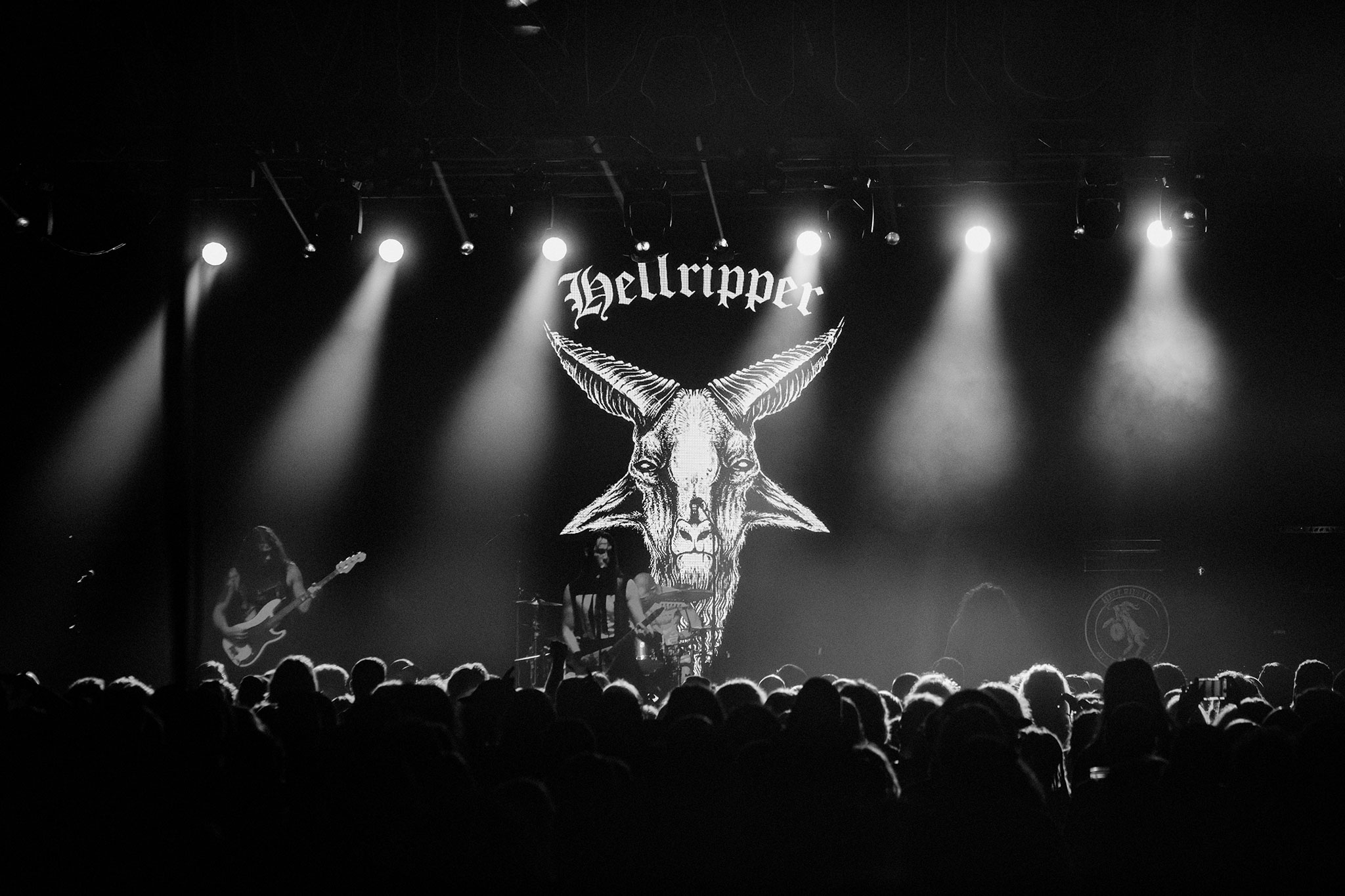
Hellripper operates on two distinct tracks: the solo recording project and the live band, which for touring purposes includes guitarist Joseph Quinlan, bassist Andy Milburn, and drummer Max Southall. McBain treats the two versions of the project as fundamentally separate things. “When I’m recording, I like to be very deliberate with what I do, I like to experiment with new sounds and textures and I like to take time to craft the best thing I possibly can at that moment. It’s about enjoying myself first and foremost. The live side of things is where I embrace the chaos a little more, and I enjoy the unpredictability of a show. I want to have a good time, and I want the audience to have a good time.”
Whether the geography of Scotland is inseparable from what Hellripper sounds like is a question McBain deflects thoughtfully. “It’s difficult to answer that because I’m from Scotland and have always lived in Scotland, so I know no other way of doing things. The beauty of art and music is that there’s no right or wrong way to do things, and an infinite amount of things can be created due to people’s backgrounds, locations, technical ability, influences, experiences and so on. Hellripper seems to be the result of all mine.”
Coronach is out March 27, 2026 via Century Media Records. Artwork by Adam Burke of Nightjar Illustration.
Live photo – Steve Gerrard
Share this :


