
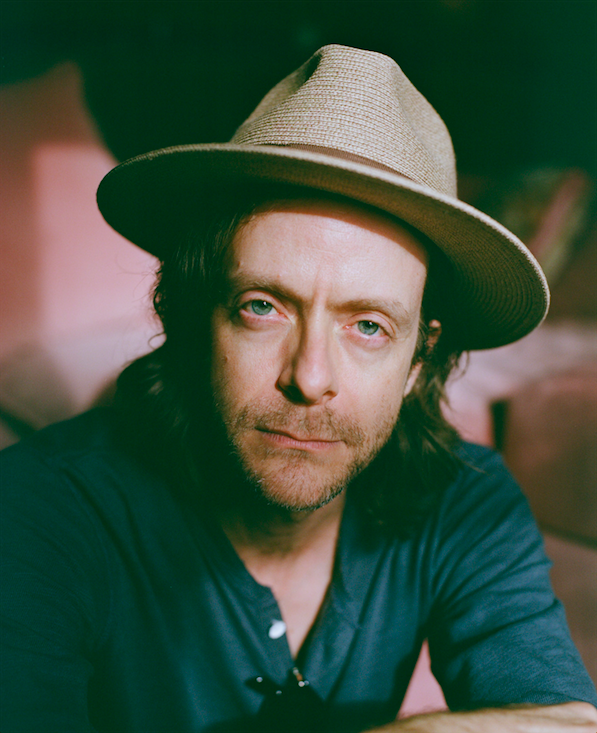
Daniel Isaiah keeps coming back to the room.
Not in a romantic way. Just the actual room at Mixart, four days, a handful of players, no real plan beyond showing up and seeing what happens.
“With Western Medicine, it was a band in a room, playing together. No click track. Every take was different. It was more immediate, and more fun.”
He’s talking about going from working on his own to being in the room with a band as the songs come together.
He says it like it’s obvious, like maybe it didn’t feel like a big shift while it was happening. Then he pulls it back a bit when I bring up the idea that the record came from somewhere more instinctive.
“Did I say that? The songwriting process was the same. The big difference was in how the record was made.”
Before this, To Live a Wild Life came together in pieces. Voice, piano, acoustic guitar, tracked alone, mostly to a click. Then into the studio for a couple of days with Warren Spicer and Stef Schneider, building it out afterwards.
“I was mostly sitting on the couch listening and nodding my head.”
This time he’s not removed from it. He’s in it while it’s happening, which changes the shape of things in ways that don’t really show up on paper. You hear it more in how the songs move, where they hesitate, where they lean too far and don’t quite pull back in time.
Warren Spicer is part of that, both as a player and the one capturing it. Engineering, mixing, electric guitar, all of it happening at once.
“Warren set up the room and made everything sound great, but his approach was mostly to document the band, which included him on electric guitar. For those four days, we were a real band, shaping the sound together moment to moment.”
It’s less about someone steering and more about knowing when to stop.
“He also had the clearest sense of when we’d ‘got the take’ and could move on.”
You hear that most clearly on “How The Tiger Got Her Stripes.” The version that stuck is from early on, a take that got away from them a bit.
“Musicians generally want to be respectful to the song. You know, ‘the song comes first.’ Don’t overstep. But on that particular take, maybe the song didn’t come first. Everyone was just digging in and playing what thrilled them, and it was more about that than the song. And for that particular song, that’s exactly what was needed. We pushed it to the edge. The other takes didn’t have that.”
It’s a strange admission in a way. Letting the performance override the song, even temporarily. Letting things get a little out of hand and then deciding that’s the version that holds.
There wasn’t much time to overthink any of it anyway. One rehearsal. That’s it.
“We went into the studio with no fixed ideas. No one had worked out parts in advance. Everything was being made in real time. You can hear that on the record. It gives the songs a kind of looseness and unpredictability.”
He knows how that sounds.
“Not rehearsing is generally not advisable, but for this music and these musicians, it worked out okay.”
The musicians matter more than the method. Mishka Stein and Robbie Kuster have years together from Patrick Watson’s band, which means they don’t need to talk much to lock in.
“They’re pros. Excellent musicians. Confident. Cool.”
Jérôme Beaulieu pushes in a different direction.
“Jérôme Beaulieu has this youthful energy and powerful hands, which pushed things physically.”
And Spicer, even while playing, holds something back.
“Warren is a very good player, but he held back. He was more in a producer role, anchoring everything.”

That balance shows up in how the songs carry themselves. Some of them feel like they could tip over if someone pushed a little harder.
The writing hasn’t really changed in the way he talks about it. Still instinctive, still something he doesn’t fully try to control.
“Ideally, the song decides. Sometimes a song needs a bit of poking and prodding. Other times you just have to leave it alone for a while.”
“Champion Is Down” didn’t come together easily. They kept trying different versions, none of them sticking.
“We tried glam, we tried croony jazz, we even tried dream pop, nothing seemed to work. I liked the lyrics a lot, though, so we pushed forward and settled on a pared-down version with just piano and voice.”
The lyrics across the record move between the personal and something more distant. “Fire In The Night” sits close to loss. “Champion Is Down” pulls from images of Mussolini and Gaddafi being taken down by their own people. Different scales, same weight sitting underneath.
“Old Ram’s Horn” starts with something physical, his grandfather’s shofar, then drifts away from it.
“Each verse names an object inherited from a different family member. But the objects themselves aren’t important. The song is really about the absence of the people they came from.”
Montreal is there too, though not always directly. He still lives there, still writes there, but it doesn’t always show up in obvious ways.
“I recorded a song called ‘Brock Avenue’ a few years ago, set in the neighbourhood where I grew up. It took me twelve years to finish.”
Twelve years for a song that, in the end, barely holds onto its original focus.
“The earliest version was all about the dark-haired girl who takes up just a few lines in the final version. I had to zoom way way out to find the right perspective for that song.”
That distance feels connected to how these songs were finished, or maybe not finished at all in the traditional sense. Some of them were still shifting right up until the sessions.
When he listens back now, there isn’t much distance.
“I’ve recorded a lot of songs, so I’m used to hearing my voice back. At this point, not much about it surprises me.”
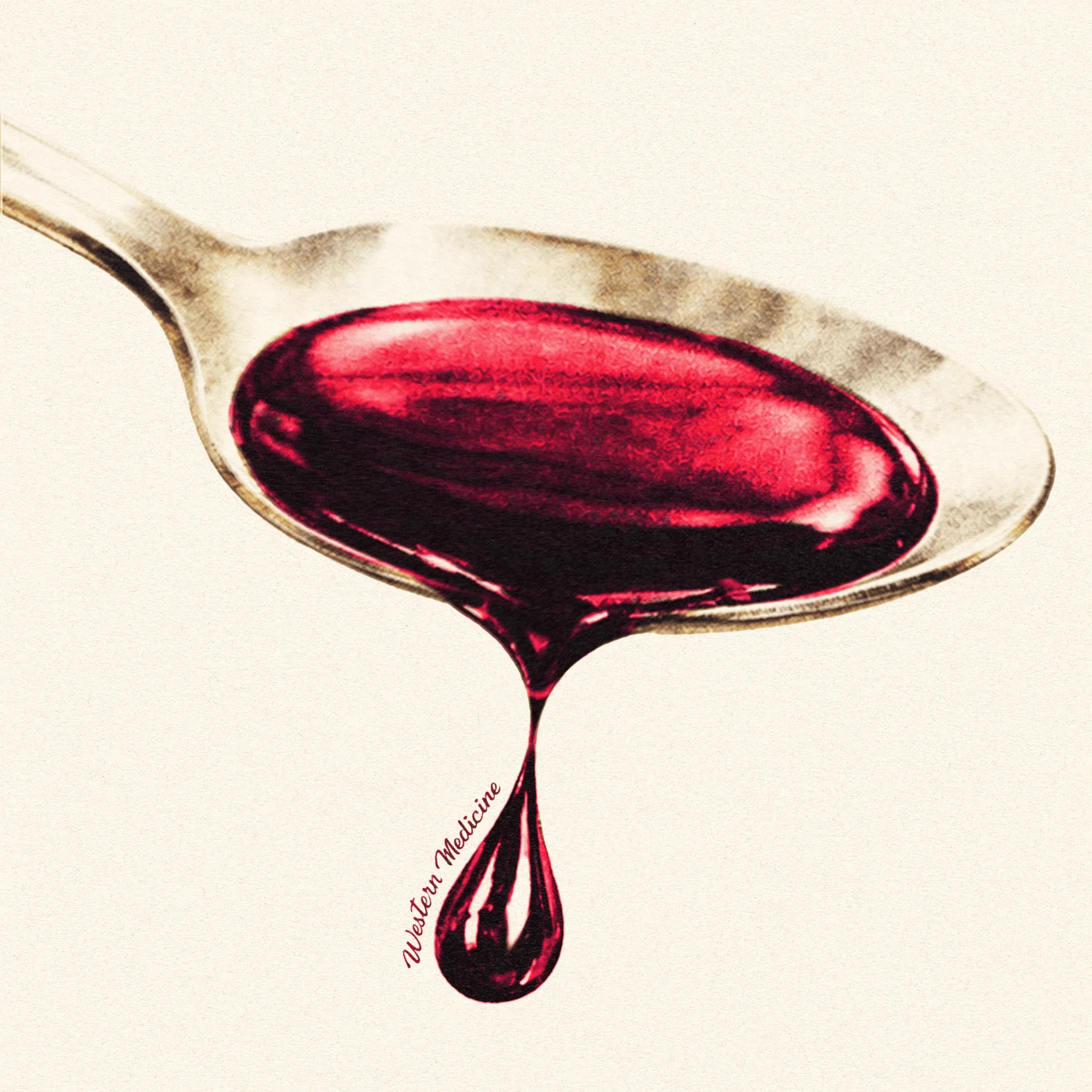
Western Medicine is out April 17
| Photo: Clark Ferguson |


