
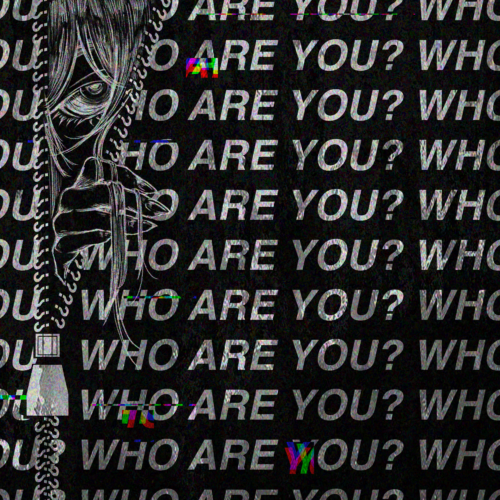
The name Second Field Fight Club isn’t metaphorical. It comes from something specific, something Lucas remembers clearly.
“The name is based on a real thing when people back in my high school would have fist fights in the second football field,” he says. “There were two. The kids that took part in those fights didn’t come from very nice backgrounds, and I think that the fighting was just them letting off steam, I guess.”
He never got involved. “I never took part in any of those fights, cuz my mom wouldn’t let me.” He laughs at that now, but the mood stuck. “I think there was a lot of teenage angst in working on the first album, but now that I’m getting older, a lot of that feeling has gone away.”
That first album, To The Heavens, came together without much planning. Lucas didn’t map it out or chase a specific sound. “It’s cliché for me to say, but I just wrote whatever came to mind, and if it’s not in the vision of what I’d want this music project to sound like, then I just don’t finish it,” he says. “When I was making the record, I was listening to a lot of Whirr, Deftones, Boris, Sleep and Electric Wizard, so I just wanted a little bit of this and a little bit of that. Never really had any direction, just feeling along with the influences I had during the time.”
That lack of direction is part of what gives the record its weight. “I wasn’t that conscious at all, I just thought that the heaviness was part of the atmosphere around the album. I wanted to have a few sombre moments in the record, but the noise was always the primary focus.”
Some of the imagery came from something he hadn’t thought about in years. “When I was like 10 or 11 years old, I read this really cool book called The Brick Bible, which was an illustration of the Bible with Lego, and it was a very, very surreal read, particularly the book of Revelation of that rendition,” he says. “I actually had forgotten a lot of the passages from Revelation so I was pretty lucky tracing back some of the lyrics written for the record. So yeah, a big chunk of the record was inspired by that.”
The project didn’t stay solo for long. The shift into a band happened after a show, the kind that hits you physically before you even process it.
“It was my first big metal concert, and I think the highlight of the whole show for me was that there were a lot of people just moving everywhere all at once,” Lucas says. “On every kick drum, my heart would have this sharp feeling to my chest like I was being stabbed the whole show. To me, I think it’s an ego thing, like it would be any musician’s dream to get that kind of motion from a crowd. Plus, they played really loud and I also wanted to be really loud too. I’ve had this idea of forming a sludgey band since 2023 so I was like you know what, the best time is now.”
Lex was there too, watching the same thing unfold. “I had the desire to be in a hardcore band for a while and going to the Deftones concert with Lucas strengthened our bond over that kind of music and also seeing Radin there and experiencing the energy of the crowd was inspiring for me.”
For Radin, it felt inevitable. “Personally, I think it was because we clicked and bonded over a band that we all liked, with prior time spent together doing shows with our other bands, it made it pretty easy to start jamming together.”
Now the songs still start with Lucas, but they don’t stay his for long. “When I bring a song to the band, it’s usually in a prerecorded demo, and for the real recordings and live performances, I just ask them to follow the groove and chords,” he says. “If there’s any specific motifs I want, I just tell them to do that, but I don’t really care how they play and let them have fun.”
The biggest shift is in how the music is being recorded. “Another big thing for me is that the drums on the first record were programmed and now that we’re working with a professional jazz drummer, we’re getting a lot of live drums recorded for our next album. It is a big change for me since mixing programmed drums is a lot different than live drums, so I have a lot to learn.” He pauses, then adds, “Radin is also very technical with lead guitar, like he could play stuff I can’t do, so I’d probably say that future recordings are going to get a lot crazier.”
Everyone is pulling from somewhere slightly different. Lucas came up through funk and post-punk. “The first few years playing bass I was really obsessed with fast slap basslines on the Red Hot Chili Peppers songs as well as Primus, as well as post punk songs by Joy Division, Interpol and The Smiths,” he says. “Andy Rourke from The Smiths has a really good groove that I try to emulate in all of my music. I guess I just built enough technical ability to make a lot of the music I want to make.”
Lex keeps his approach more stripped down when it comes to this band. “I don’t really use any jazz technique in my playing for Second Field, and I really just try to be as loud and controlled as possible,” he says. “My jazz playing is usually quieter, and the language doesn’t translate as well to the Second Field context. The technique I guess shows up and is important when doing fast single strokes if anything.”
Radin sees that contrast as part of what keeps things from falling apart. “I think yes because it gives some sort of structure to everything and makes it all come together and not just be pure noise.”
They’re still finding their place in Montreal. Lucas doesn’t pretend otherwise. “The music here is ok sometimes, I guess. Live music is always fun to watch for me. I like Truck Violence and Blue Linen. I wouldn’t say I feel connected yet since I’m not integrated much into the scene yet.”
Lex is already noticing small signs of momentum. “We’re still a pretty new band in the Montreal scene at the moment, so the shows we’ve done have been through personal connections, but we get people returning to shows after seeing us at previous ones, and we’ll definitely get more recognition in the scene through time.”
Radin is more direct about what’s around them. “It’s just an incredible city with incredibly talented bands that are all unique in their own way and we love playing with them. Specially the heavier more alternative darker side of music is really vibrant in Montreal so as a band who follows the same musical roots it feels amazing to be somewhere where it is super welcomed to be experimental.”
That openness is part of the appeal. None of them are interested in narrowing things down too early.
“For me, not being limited to one genre means that I’d have a lot more freedom in the way I mix the music and play the bass,” Lucas says. “Like, I produce hip hop too, so maybe some elements from that might slip into this band. I definitely want to incorporate more electronic elements into our music in the future, so we’ll see.”
Lex is already thinking in that direction. “I’m really into breakcore and digital hardcore music so maybe in the future we can incorporate that kind of sound into the songs.”
Radin shrugs off the idea of picking a lane altogether. “Releasing anything and everything that sounds good to us. It might be a blackgaze song or a pop punk-inspired 2000s track. Anything that makes us feel something is worth sharing, so maybe someone else can feel the same and enjoy it too.”
Share this :


