
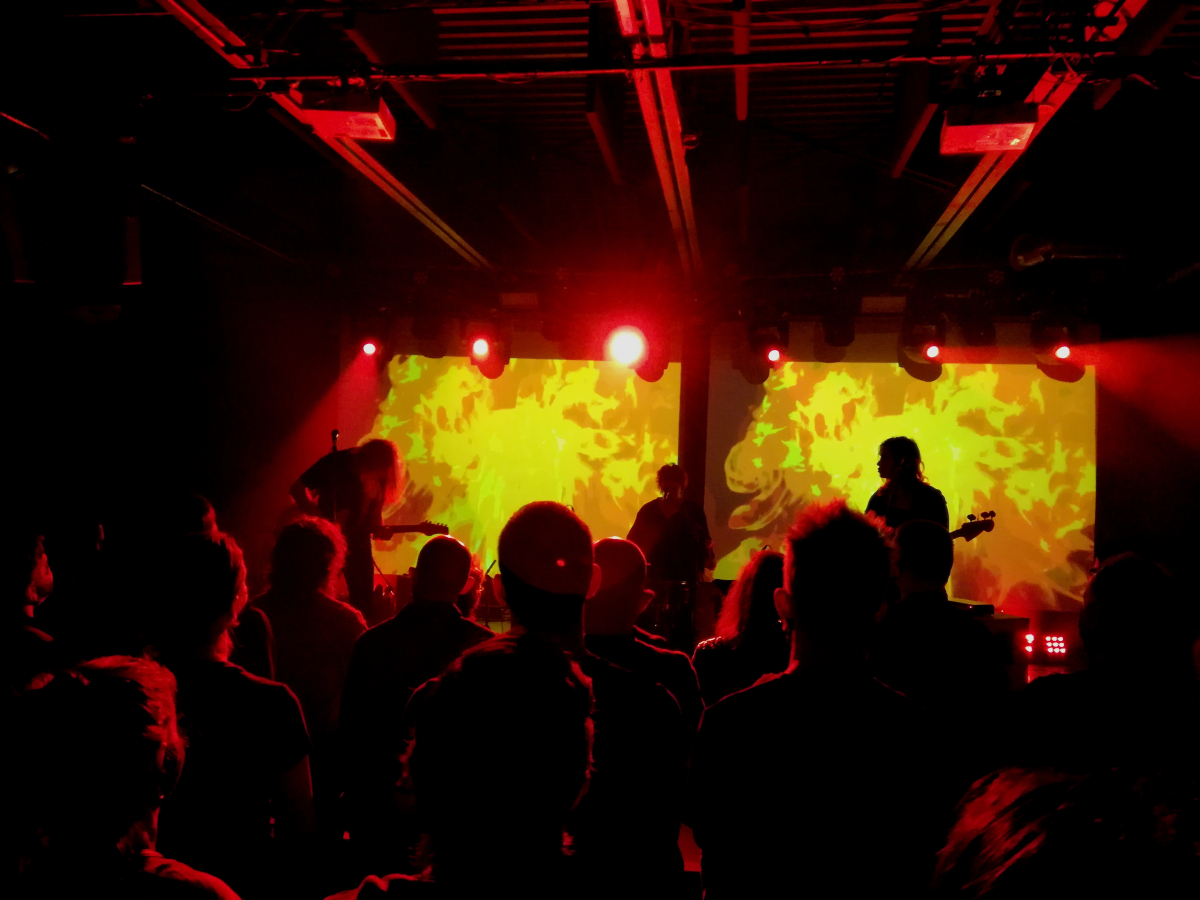
The night’s openers were Divide and Dissolve, a doom metal band from Melbourne, Australia. They were loud, sludgy, each song starting with guitarist Takiaya Reed building a looped base of clarinet to be obliterated once guitar and drums arrived.
The noise they make pummels, reaches inside your head and shouts at the brain. It curdles your insides and mangles the ears. It’s not really clear from the heavy, low tones, how it goes together or what exactly is being formed. The clearest answer comes from percussionist, Sylvie Nehill’s slow, deceptively simple and organic rhythms, which shape the compositions into a form, or at least give them bones from which you can imagine the whole creature. Her drumming reminds me of Meg White’s, but heavier – the sort of immersive drumming that communes with the music, adds structure, while not necessarily being the beat you’d expect.
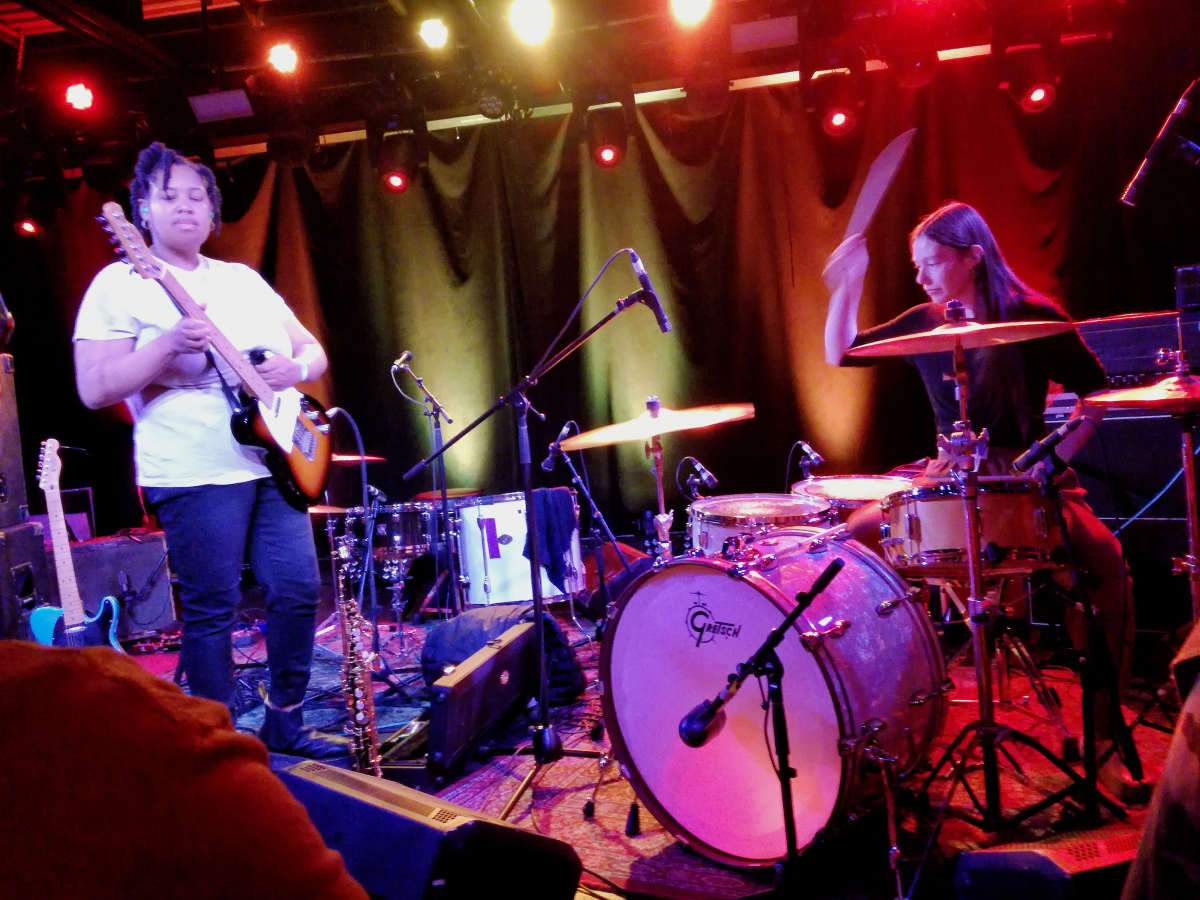
Between each track, Takiaya speaks, about the violence of borders, racism, white supremacy, and their wish as proud Indigenous people (Takiaya is Black and Cherokee, and Sylvie is Maori) to start conversations about these structures and to obliterate them. Takiaya says she’s becoming more chatty as the tour goes on, and this is where the set (for me, at least) was hindered.
Divide and Dissolve are an overtly political band with a strong, clear ideology and drive to destroy systems of oppression. Read any interview with them and it’s clear. Watch the video of ‘Resistance’ in which they spray their own urine on a statue of Captain James Cook. I loved the bemused way in which Takiaya expressed her pain at crossing imaginary lines drawn between nations to get here, but I felt like it would have been a more powerful statement left at that, if she’d cracked open people’s minds with a pure jab of insight, then left it to the music to do the rest of the work. I hesitate to say this – it’s certainly not up to me to say when anyone should or shouldn’t speak, or who, or why – but for me, the gaps between tracks were too long. Everything Takiaya said needs to be said – and it’s true the fuckedness of our current era and a continued lack of awareness about how we got here needs it said plainly, and loud, and often as an interruption to standard programming – but in the context of a live performance the stutter of pace jangled.
There was a point, some way through ‘Prove It’ where the music properly took hold of me, and in doing so, the message. I could pick out for the first time the clarinet notes far beneath, forgotten since the beginning of the track, that felt so long ago it could have been the beginning of Time. I heard wailing voices in them, wails of pain or perhaps celebration. The guitar and drums were the Earth breathing, a mass of people throwing off heavy chains. More of this and who knows what other hallucinations would have appeared. An uninterrupted, bludgeoning wall of sound contains whole worlds of promise, joy, anger, revolution and change when it’s allowed to stretch and blend into itself.
LOW
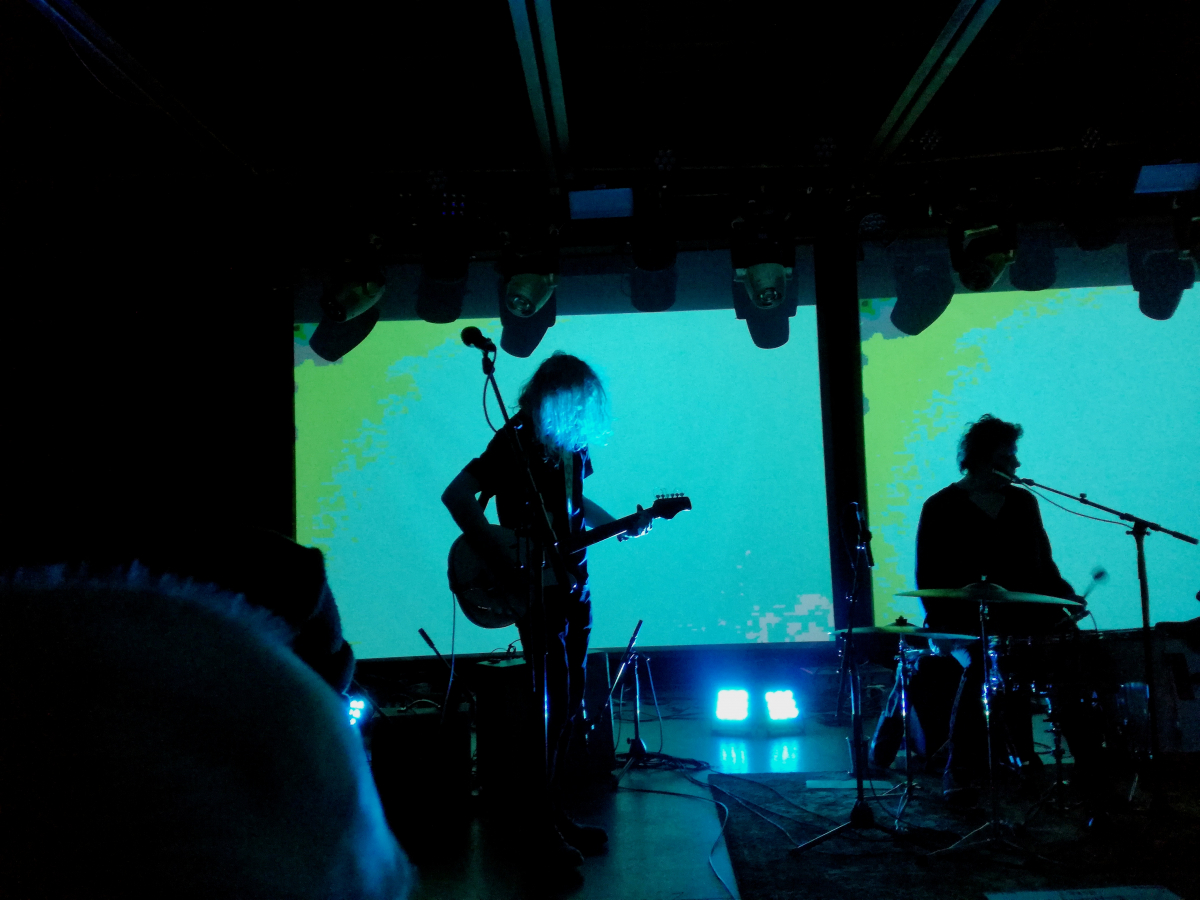
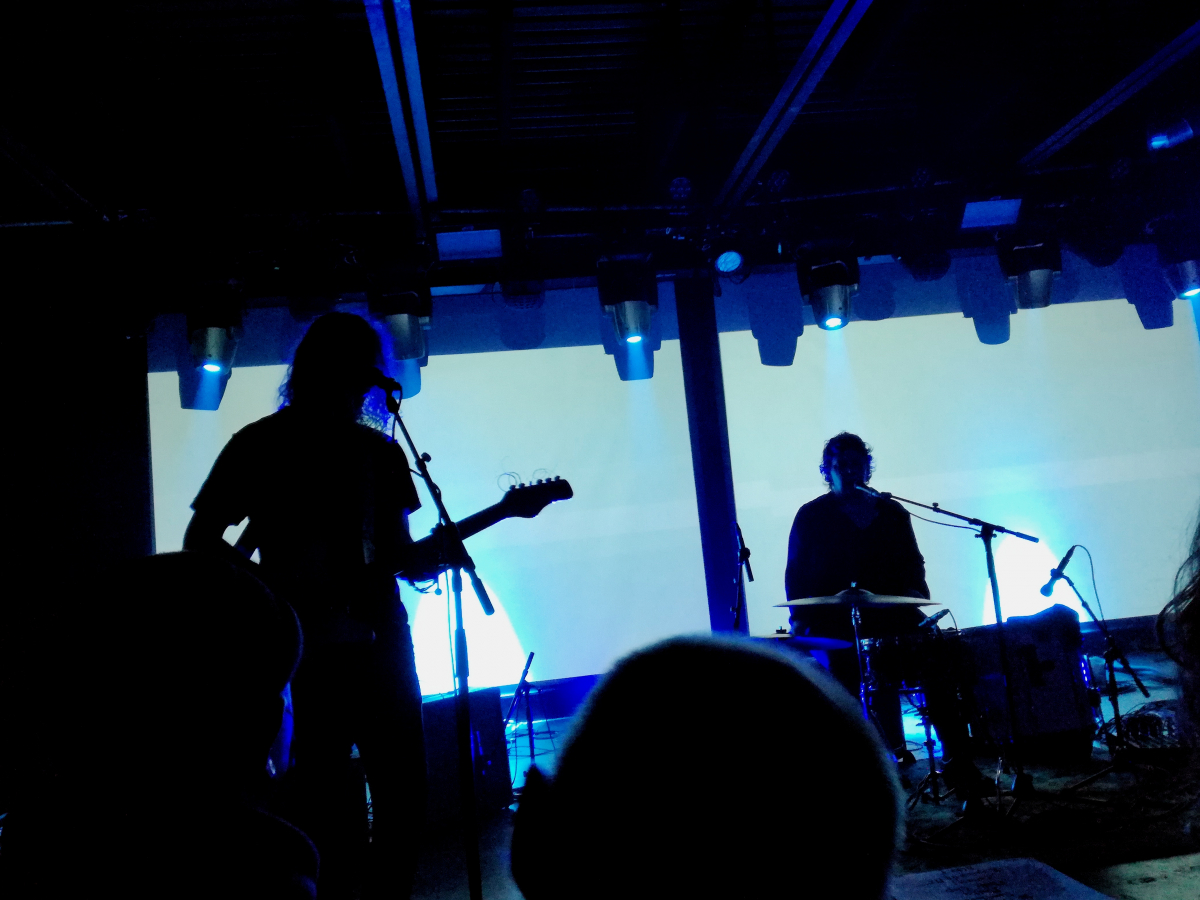
The stage is sparsely-furnished and the lights are off when LOW come on. Projections behind the band silhouette them throughout. We catch only glimpses, but nothing more is needed.
They start by playing almost the entirety of their latest album, ‘Hey What’, in order. It all sounds incredible – from the jagged, static-soaked beginnings of opener ‘White Horses’, through the throbbing backward guitar hum of ‘Disappearing’, to the stately beauty of the record’s closing track ‘The Price You Pay (It Must Be Wearing Off)’ in which Alan Sparhawk’s and Mimi Parker’s beautiful vocal harmonies are at the forefront of the song’s sparse beginnings before soaring and being buried in the beat and glitch distortion of the end.
The rest of the set mines their incredibly rich back catalogue, with tracks from Ones and Sixes, 2013’s The Invisible Way (‘Plastic Cup’, dedicated to Divide and Dissolve, for ‘teaching them so much both on and off the field’), and as far back as 1999’s Secret Name for an encore rendition of ‘Will The Night’. I’m already melting long before that point, long before they’ve played anything from Double Negative or the album that introduced the band to me, 2011’s C’Mon.
It’s incredible that a band that formed in 1993, who next year will have been together for 30 years are still this good. The consistency that shows itself through their records is even more evident live (and that’s before you even consider the revolution of their sound over the years). It reminds me of the late, great, John Peel’s quote about his favourite band, The Fall, that they were “always different, always the same”. From the old songs to the new, they are fully themselves, constructing emotional weight and depth from delicate touches, and in the case of the more recent material, enhanced by sounds that seem to threaten to dismantle the songs altogether.
They are a massive band (massive in heart, massive to me), and to see them perform in a venue the size of the Theatre Fairmount with the lights all but off, was an extraordinary experience. Listening to LOW on record is intimate, but their creation of a kind of ego-less live performance makes you feel both as if you are inside the music, and it is inside of you.
Review – Dominic Blewett
Share this :


