
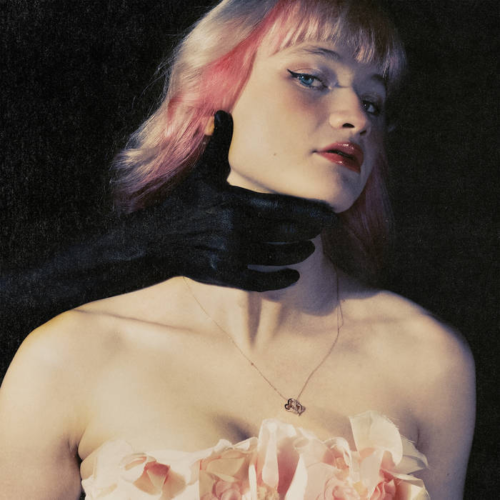
At 22, Ella Red has already built the kind of artistic mythology many musicians spend decades chasing. Her debut album IT’S NOT REAL feels less like a conventional first record than a long conversation with the younger version of herself who first started writing its songs as a teenager. Across twelve tracks, the alt-pop songwriter pulls together years of restless questions about existence, identity, fear, and femininity, transforming them into something theatrical, gothic, and deeply intimate.
For Red, the ideas behind the album began forming long before she understood what to do with them.
“When I was younger I understood that I knew too much,” she says. “I would lay in bed seeing the end of the universe behind my eyes and wake my mom up saying, ‘I don’t want to die.’ The only thing that changed while writing this album was that I learned to love it, the fear. I separated that younger version of myself and held her while I wrote this album as a way to comfort her.”
That sense of existential dread, and eventually acceptance, runs through IT’S NOT REAL like a thread connecting past and present. The album opens with “Parasite,” a song that sets the emotional tone immediately. Sparse instrumentation gradually gives way to something far more dramatic, a slow climb toward emotional rupture. For Red, the track felt like the moment she truly stepped into her voice.
“Parasite was the first song I wrote where I felt untethered to any ‘responsibility’ when it came to my writing,” she explains. “I wouldn’t take ‘no’ for an answer. It was the first time I truly felt vulnerable with what I was writing about, and I thought the ominous start to the song with the intense build and emotion in the end would be the perfect introduction to my artistry. I could imagine the way the entire song would sound as soon as I began writing, and I knew it would be the beginning of something.”
That willingness to abandon restraint shaped the rest of the album as well. Red’s writing frequently sits at the intersection of personal confession and something larger, almost mythic. The emotions may be intimate, but the imagery stretches outward toward cosmic questions.
“Writing was my only outlet,” she says. “Music has always been what I’ve been best at and the only way I could expel all of this energy surrounding the swirls in my mind was to say it out loud. To try and describe it accurately, like I’m staring down a gun.”
That intensity carries into some of the album’s most direct moments, particularly the single “He Asked For It,” which reclaims language historically used to blame women for violence against them. In Red’s hands, the phrase becomes something defiant rather than accusatory.
“The response on ‘He Asked for It’ has been exactly what I hoped it would be, although I know she isn’t done yet,” she says. “Many people have shared their own experiences with me, and found that this song made them feel their power again.”
Musically, IT’S NOT REAL moves far beyond the traditional instruments Red grew up playing. Raised on piano, guitar, and cello, she approaches production with the curiosity of someone who understands classical structure but refuses to stay inside it. The album blends gothic textures, electronic atmospheres, and theatrical pop melodies in ways that often feel deliberately unsettling.
“IT’S NOT REAL was definitely different for me, but there was no other way to explain the emotion and experiences than by experimenting with the way the entire song feels,” she says. “It goes beyond melody and lyrics and while I pride myself on both, a song is not complete unless it makes you feel something, especially disturbed.”
Her influences reflect that same mix of boldness and craft. Artists like Lady Gaga, Billie Eilish, and Sofia Isella may seem like an unlikely trio, but Red sees a common thread running through their work.
“Lady Gaga is bold with her melodies, Sofia with her lyrics, Billie is clever with both, and all 3 with their fashion,” she says. “I’d like to think all of this shows up in my own artistry.”
That theatrical instinct has become especially visible on stage. Red’s live shows have developed a reputation for turning concerts into something closer to communal catharsis, particularly during songs like “Aphrodite,” where the emotional tone shifts dramatically in the room.
“The entire show feels like a party with all my friends where we’re all dancing and laughing and screaming,” she says. “But then Aphrodite starts, and it’s still all my friends, but now we’re crying and holding hands and connecting on a deeper level. Aphrodite is my most precious song to sing live, to feel with the crowd because not only do I see them, but I see them too, and in this moment we are one.”
The audience connection has only grown stronger since her breakthrough moment arrived earlier than expected. The single “I Like You Best” went viral before Red had even released a full album, pulling in millions of streams and pushing her name into the wider pop conversation.
“I Like You Best gave the very much needed kick to the industry that I was someone they should be paying attention to, but no one could’ve guessed what I would do next,” she says. “I didn’t feel much pressure to create something similar to ‘I Like You Best’. I knew I wanted to be known for more substantial music, but it got people to turn heads, and once they were looking, a second was all I needed.”
That confidence allowed IT’S NOT REAL to expand outward rather than chase the formula of a viral hit. The album’s closing title track pushes its themes of existence and time even further, suggesting that art itself might be the closest thing humans have to leaving evidence behind.
“I don’t think anything I write should be conclusive until I’m on my deathbed,” Red says. “Actually even then I’ll probably have more to say. Time is a manmade construct. It does not exist to the entire right side of our brain. Therefore everything is never-ending, never-beginning, never and somehow always existing. And we as humans repeat and repeat and repeat our histories learning so much and still so little. It will never end.”
That idea, of stories looping endlessly rather than reaching tidy conclusions, feels like the philosophical centre of the album. Instead of resolving the existential questions that haunted her younger self, Red simply learns to live alongside them.
In recent weeks she has been bringing those questions directly to audiences on her first headline tour, including a stop in Montreal earlier this month. For an artist who spent years writing alone with her thoughts, the experience of singing those songs with a room full of people has taken on a meaning of its own.
“With my first headlining tour just around the corner, I’m most excited about getting to sing with everyone every night,” she says. “I’m not nervous about if anyone will like me, like I was as an opener, because they’re all there for me this time. I’m probably more nervous about getting sick or messing up during my outfit change than anything about the actual performance. It’s going to be a party.”
If IT’S NOT REAL is any indication, that party will likely come with a healthy dose of existential dread, catharsis, and theatrical pop drama. For Ella Red, those things have always been inseparable.
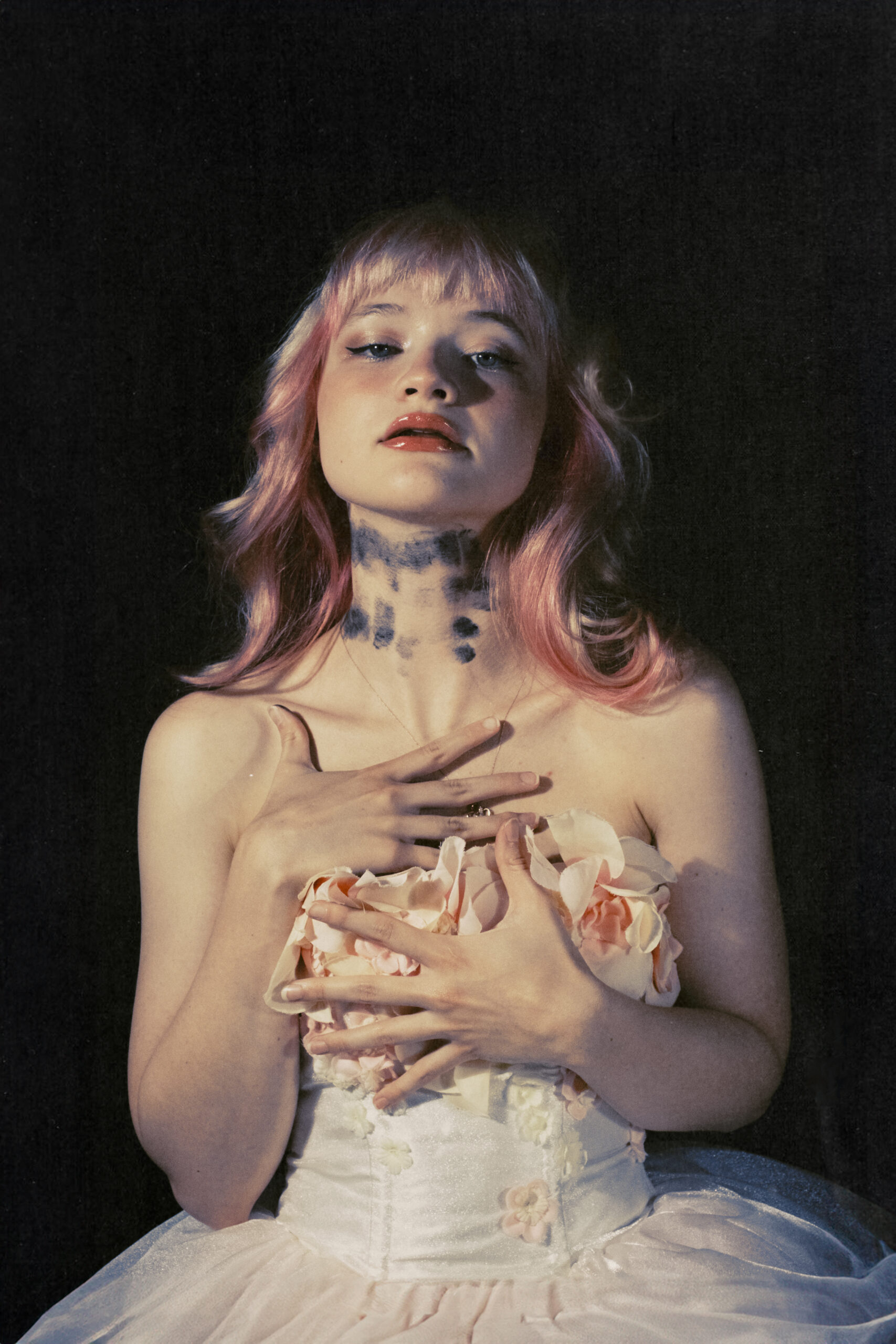
Photo credit – Abby Mueller
Share this :


