Photo Credit: Chuck Brueckmann
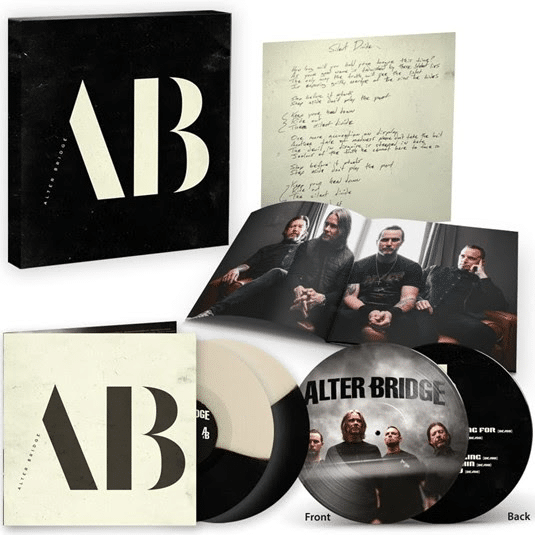
As Alter Bridge prepare to release their self-titled eighth studio album on January 9, Myles Kennedy sounds cautiously optimistic about the state of the world. It’s a marked shift from our conversation three years ago, when the band’s last record arrived just as the pandemic was ending.
“It’s gradually getting back to some semblance of normal. Nothing’s normal anymore. Nothing is normal. It’s really quite a shift. But no, it’s good. I feel like things are better overall. The world doesn’t seem quite as wacky,” Kennedy says, before catching himself mid-thought. “I say that, I kind of naturally, after I say it, I’m like, I don’t know if that’s actually true, but it feels good to say.”
When asked if he feels more hopeful than he did in 2022, Kennedy admits the answer might lie in strategic detachment. “Maybe it’s because I’m choosing not to exist in this constant state of worry and paying as much attention to all of the noise and all this static. I couldn’t. I’ve talked with so many people about just needing to tune it out. I don’t digest nearly as much news as I used to. I was a news junkie from when I was a kid. I think I’d heard that from my mother. But at this point, I just couldn’t do it anymore. It was just messing with my mental health. So I feel overall, yeah. Do I feel a little more hopeful? Yeah. Maybe just ignorance is bliss.”
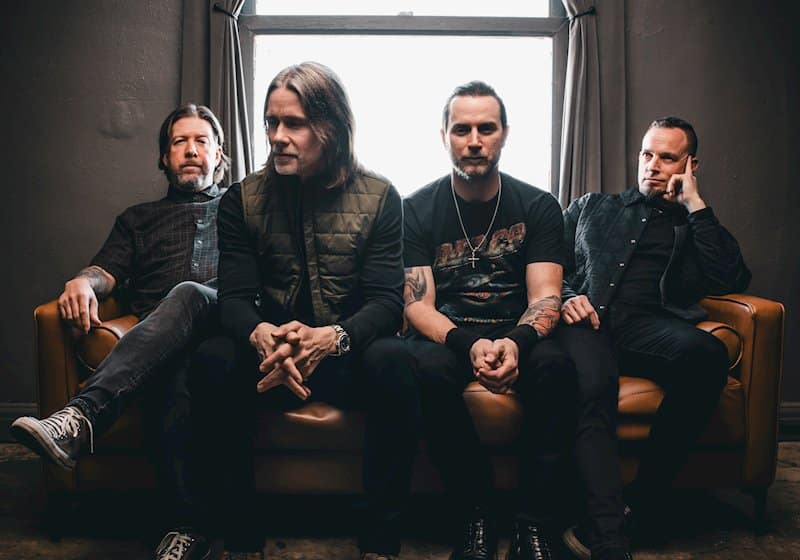
It’s a philosophy that extends to the band’s approach to their new album. After more than two decades as one of rock’s most consistently acclaimed bands, Alter Bridge have learned to trust their instincts. The quartet, featuring Kennedy on vocals and guitar, Mark Tremonti on guitar and vocals, Brian Marshall on bass, and Scott Phillips on drums, have built their legacy on towering riffs, infectious melodies, and masterful guitar interplay. Their new self-titled record represents both a culmination and a renewal.
The decision to self-title their eighth album wasn’t born from grand artistic intention. “I think to some degree it was born out of laziness, honest to goodness,” Kennedy laughs. “We were sitting around in the kitchen area at the studio, and they’re like, what are we going to call this? Someone just said, why don’t we just self-title it? I’m like, well, gosh, I guess we could. We’ve never done that. But nobody had any idea that when we started talking about the record that people would be like, why are you doing that? And I think maybe to some degree, after the fact, we realized, well, it could be like, on so many different records, we have this. We’ll lean one way with like, okay, we’re going to integrate keyboards here. We’re going to do these long drawn out epics, more of those or whatever the flavour is, but throughout all those records, there’s always been this common thread of riff-based melodic music. And that’s really where we’re leaning into with this and throughout. And that’s what this is.”
Kennedy emphasizes that calling it self-titled expresses something deeper about the band’s identity. “This is kind of the, I feel like calling it self-titled expresses that we’re very cognizant of what our true DNA is. And we’re leaning into that.”
The album’s first single, “Silent Divide,” immediately announces that intention. From the opening seconds, the track channels classic heavy rock influences. “You bring up Black Sabbath and it’s funny, for me, that riff is very old school. It’s kind of like one of those timeless riffs that feels like it’s always existed,” Kennedy notes. “There’s definitely an aggressive element to this record. And there’s definitely an intensity to this album that maybe more so than just about anything since maybe Fortress, at least the way I look at it.”
Recording took place at two legendary locations: the iconic 5150 Studios in California, built by Eddie Van Halen, and longtime producer Michael “Elvis” Baskette’s studio in Florida. The experience of working in Van Halen’s creative space profoundly impacted the band’s approach.
“Knowing we were going to start the process there, especially for Mark and I, really forced us. And I think that’s why the record sounds the way it does with the kind of riffs that we have, is that we knew we were going into this sacred space and we really did not want to show up without being really prepared for that. We didn’t want to tarnish the legacy with something that we did there,” Kennedy explains. “I’ll say we did the best that we could knowing that you’re not going to get to that level. It’s Eddie. It’s Eddie and frankly, Wolfgang’s Wolfgang. A lot of talent in the DNA there. So I’m certainly not going to claim that I have that. But yeah, it was definitely something that helped. I think it helped us elevate our game and it forced us to work that much harder. And once we got in the thick of it and we’re in the room, it was just an absolute joy. I mean, it was just an absolute pleasure and honour and looking around there as we’re creating and arranging the songs and standing roughly in the area that Eddie stood at times and just knowing like, wow, I mean, this is sacred ground and I was just grateful.”
Production-wise, the album continues the stripped-back approach the band initiated on 2022’s Pawns & Kings. “We’re trying not to over-layer once again. I think we really learned, we always say we learned our lesson because we may do it again, but certainly on Walk the Sky and the last hero and those records, there was definitely a lot of layering and there’s keyboards here and there tucked in and with this, it was like, let’s just be rock and roll band. And I think we started that thought process on Pawns & Kings.”
The album features what Kennedy calls “shells” when he brings demos to the studio. “I like to turn in what I call shell demos where it’s like, okay, here’s a riff, verse, chorus, maybe part of a bridge. Occasionally it’ll be the whole thing done, but I don’t like to do that. I prefer there to be loose ends so that we can go in there as a group and with Elvis and be like, okay, let’s try this now and not be precious with the demo and trying to make it sound as good as the demo.”
He credits a conversation with renowned producer Dave Cobb for shaping this philosophy. “He mentioned he wasn’t necessarily a huge fan of demos just because it can kind of change that process once you get in the studio. I had an A&R guy that said this years ago, you have a bad case of demo-itis where you’re so used to hearing the demo, you’re just trying to match the demo. And so I like to turn in something that is intentionally not done. I want there to be definitely a foundation that we can build on.”
Balancing the Alter Bridge sound with innovation remains an ongoing challenge. “It’s a great question and it’s something that has certainly come up where we are, I don’t want to say we’re guilty of it. I think we’re just aware of what our fans expect, a certain sound. And it’s like, you don’t want to alienate them. You don’t want to put something out. It’s like, that doesn’t sound like Alter Bridge. And we definitely have a thing that we do. But it’s learning to embrace that and kind of be unapologetic about it, but at the same time, how do you balance that to where you’re not just making the same record over and over and over again? And then if you try to do that, then are you going too far and then now you’re making your jazz odyssey? It’s like that part of the band’s Spinal Tap where they’re talking about trying to drastically change and the fans are like, what the hell is this? So I always think of that scene where they’re in the venue and people are like, what’s this? I don’t want that to happen. So it’s a delicate dance, man.”
For this record, Kennedy feels confident they’ve struck the right balance. “This is pretty straight down the middle Alter Bridge. We’re leaning into the hallmarks of the band. But we’re doing it in a way where it’s capturing 2025, where we stand right now. It’s definitely something that hopefully, definitely something I hope the fans will appreciate. That’s all you can do.”
The album’s grand finale is “Slave to Master,” which clocks in at over nine minutes, making it the longest song Alter Bridge have ever recorded. “We tend to just let it happen. With songs like that, we kind of embrace the journey that we’re about to embark on. And I think initially that song was, I think four or five minutes long, at least when I put the demo up of like the first half of the song, essentially, and then we got in the studio, Mark had this other section they thought, this would be really cool. And Elvis really liked it too. And I’m like, well, let’s put them together and see what happens. But before we knew it, yeah, we had a nine-minute song. I don’t even think we were aware of that until it was recorded. We were like, wow, this is nine minutes long!”
Lyrically, the album grapples with themes of trust and betrayal. “Once the music’s done and I’m in the thick of it lyrically, trying to figure out what the narrative’s going to be, I’m just essentially just listening to my heart, listening to what’s going on in the world around me and spin it back out,” Kennedy says. “There’s a song called ‘Scales Are Falling.’ Just the idea is like that you suddenly are aware of certain circumstances and things that you thought were one way you’ve realized that they definitely were not through the duration of the relationship and you’re like, wow, how do you navigate these waters? And I think the thing that I took away from writing a lot of the lyrics was to always learn to not be drawn into all of that and don’t become that and be better than that. And to learn to disengage and take the high road.”
Watch the full interview below:
As Alter Bridge prepare for extensive touring in support of the album, including a 31-date European run kicking off January 15 and a U.S. tour beginning April 25, Kennedy emphasizes the importance of learning from their supporting acts, Sevendust and Daughtry. “That’s why we pay close attention to who we take out. Though it’s fun to be the elder statesman and hopefully you’re playing with a band that might learn something, I’m also very interested in learning from them. And so a band like Sevendust, to me has always, to me, they’re one of the most underrated bands in the genre. I remember seeing them. They opened for, they were playing some festival in like the late nineties and I was playing with the Mayfield Four and I think it was in like Virginia Beach or something, and I remember just, I hadn’t seen them live and they came out and just, it was, I was like, I couldn’t believe what I was seeing. It was just so intense. And so that’s a band that I’ve been a fan of since that point. And they’re a force of nature.”
Of Daughtry, Kennedy notes, “Chris Daughtry has, since everybody kind of saw him on American Idol years ago, he’s really kind of proving himself as a recording artist and established a great batch of songs and he’s a great frontman, great voice. And so I’m sure we’re going to learn something there as well. I love learning. I love to continue to learn and understand that I have to play my hand.”
After more than 20 years, nearly 1 billion streams, and a legacy that includes selling out arenas like London’s O2 and Royal Albert Hall, Alter Bridge show no signs of slowing down. Their self-titled eighth album represents both a return to fundamentals and a confident stride forward, proof that sometimes the best way to move ahead is to embrace exactly who you’ve always been.
“Alter Bridge” is out January 9 via Napalm Records