
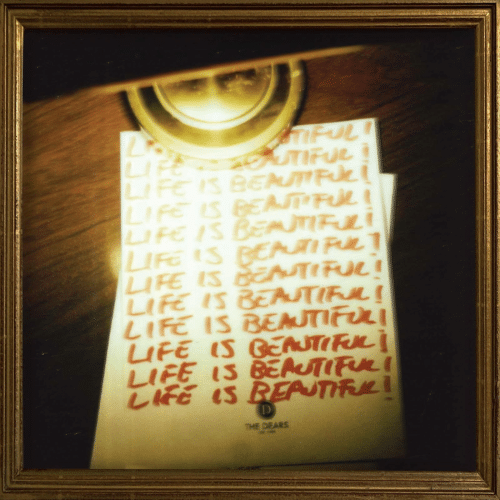
From the first bars of Gotta Get My Head Right, The Dears reintroduce themselves as seasoned players rather than youthful provocateurs. The organ thrums, the guitar chugs, Murray Lightburn’s voice emerges steady and lived-in. The title’s repetition isn’t empty bombast but a deliberate mantra. After celebrating the twentieth anniversary of No Cities Left, standing on stage with his kids and his mother watching, Lightburn realized what he was writing about.
That personal context is woven into the music: songs meant to support rather than simply dazzle. The band’s signature blend of orchestral pop, chamber-rock drama, brass and synthesizer swirl still registers, but there’s less overwrought theatricality and more clarity of purpose.
Take Babe, We’ll Find A Way. It opens with buoyant drums and a hook that nods to late-70s soft pop, though the tone is steely rather than nostalgic. The sudden cut at the end, just when you expect everything to climb into the stratosphere, is one of several abrupt transitions on the record. The Dears have long flirted with dramatic turnarounds; here they feel intentional.
Doom Pays comes out swinging with sax, a confident swagger, and a refrain that burrows its way into your memory. It recalls some of the art-pop flair of the band’s mid-2000s terrain, but the feeling is one of steadiness rather than nostalgia.
What the album does well is harness The Dears’ strengths without getting bogged down in them. Dead Contacts, a tribute to loss and absence that straddles the boundary between The Smiths and The Cure, evokes a quietly aching mood rather than a melodramatic breakdown. There’s space for reflection. On Our Lives, Lightburn raises his voice, and you sense the moment is shared and communal in intention. The Dears ask you to be in the room with them.
That communal thread reaches its clearest articulation on Tears Of A Nation. Lyrically, the terrain is pointed: weariness, injustice, the decision to engage or withdraw from noise. Musically, it doesn’t indulge in forced solemnity; the guitar figure sticks insistently, and Lightburn’s vocal shifts from lament to quiet resolve. The Dears have never been a simple protest band, but here the urgency feels earned.
One of the album’s quieter gifts is its closing stretch. The eponymous Life Is Beautiful is a duet with keyboardist Natalia Yanchak, slow-burning, tender and measured. Then Don’t Go, the last track, offers a more subdued plea for solidarity. The Dears have often mixed grand gestures with intimate confessions; here the intimate feels more central.
There are a few places where the album risks redundancy. The abrupt endings work frequently, but on some tracks, they feel too familiar. Some arrangements lean heavily on recognizable touchstones: strings, brass, choir synths. That’s part of their identity, yes, but occasionally the familiarity dilutes the surprise.
Still, the strengths outweigh the reservations. If The Dears were defined in the early 2000s by ambitious young voices grappling with big ideas, here they sound like mature artists stating big ideas and inviting you in. They still have the operatic sweep and indie-rock heart, but there’s more ground beneath them now. The results are warm rather than icy, inclusive rather than exclusionary.
In the end, Life Is Beautiful! Life Is Beautiful! Life Is Beautiful! is less about spectacle and more about invitation. To witness, to endure, to find beauty even when the path is rough.
If you’re familiar with The Dears’ discography, you’ll find echoes, and that’s fine. If this is your first entry, you’ll find a band confident enough in their voice to make something that sounds true. Either way, it’s an emotionally resonant record worth your time.
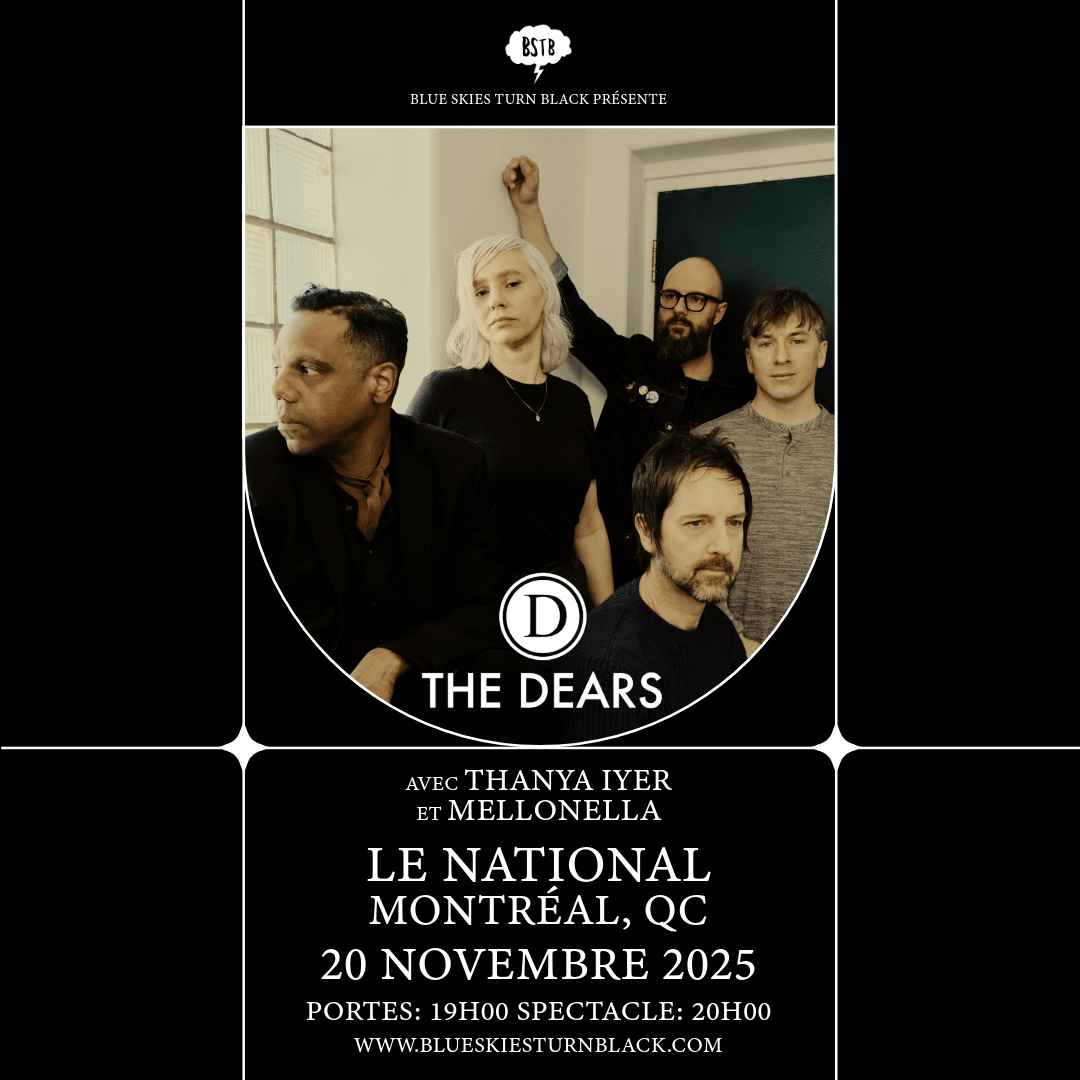
The Dears will perform at Le National in Montreal on November 20, bringing the album’s cinematic scope to the stage in their hometown. Expect a show that balances the grandeur of their classic material with the intimacy and hopefulness that define their new work.
Life Is Beautiful! Life Is Beautiful! Life Is Beautiful! will be released on November 7 via Next Door Records.
Photo – Richmond Lam
Share this :


