

Miserere Luminis released Ordalie in 2023 and then made you wait. Sidera, the Montréal trio’s third album and their first for Debemur Morti Productions, was worth every minute of it. There are records that announce themselves as important and spend the rest of their runtime trying to back it up. This is not one of those. Sidera earns its weight quietly, through depth and craft and a kind of creative restlessness that gets rarer the longer a band exists.
Black metal is the shorthand. It fits, barely. Annatar’s guitar work moves between corrosive tremolo and something closer to chamber music, sometimes within the same minute. Neptune piles in piano, bass, strings, and the architecture underneath everything. Icare drums and howls, holding the whole structure together without ever appearing to grip it. The production is clean enough to hear everything, gritty enough that you don’t feel cheated, and the clarity matters because the guitars, strings, and piano are doing different things simultaneously, and it’s all worth hearing.
Opener Les fleurs de l’exil announces itself with suspended strings before swinging a fist. The riff that follows is the heaviest thing on the record, the most direct, and the most metallic in the traditional sense. It surprised me. Ordalie was not a record that led with its chin. From there Icare starts pulling the song in different directions, nudging it forward, then sideways, then into a long groove that almost swings. He’s not just keeping time; he’s deciding when everyone else gets to move, and the string arrangements he contributes sit in the mix like a fourth instrument rather than decoration bolted on after the fact.
De cris & de cendres was released as the single, and you immediately understand why. The tremolo lines ache without turning syrupy. The clean guitar parts fracture into harshness and back again. The vocals carry something beyond technique, some sustained urgency that sounds less performed than expelled. If you want to know what this band does and whether you’ll like it, start there. Then go back to the beginning and hear the whole thing properly.
The back half asks more of you and rewards you for showing up. Aux bras des vagues & des vomissures moves in slow tidal arcs, the guitars layering upward while the rhythm section keeps everything from going weightless. À la douleur de l’aube is quieter and more interior, building toward a swell in its final stretch that is genuinely earned, cold and wide and lit from somewhere inside. Dans la voie de nos lumières closes the record quietly, no grand gesture, no release valve, just the sound of the band trusting you to sit with it.
The free-flowing structure is a real artistic choice, and mostly it pays off. There are passages in the album’s middle third where the band hold a mood slightly past the point it’s done its work, but these are small costs against a large return. Miserere Luminis are building toward immersion, a record that functions as a single shifting body rather than a collection of peak moments, and they get there more often than not. In a Montréal heavy music scene that has never lacked for ambition, Sidera still manages to feel like its own thing.
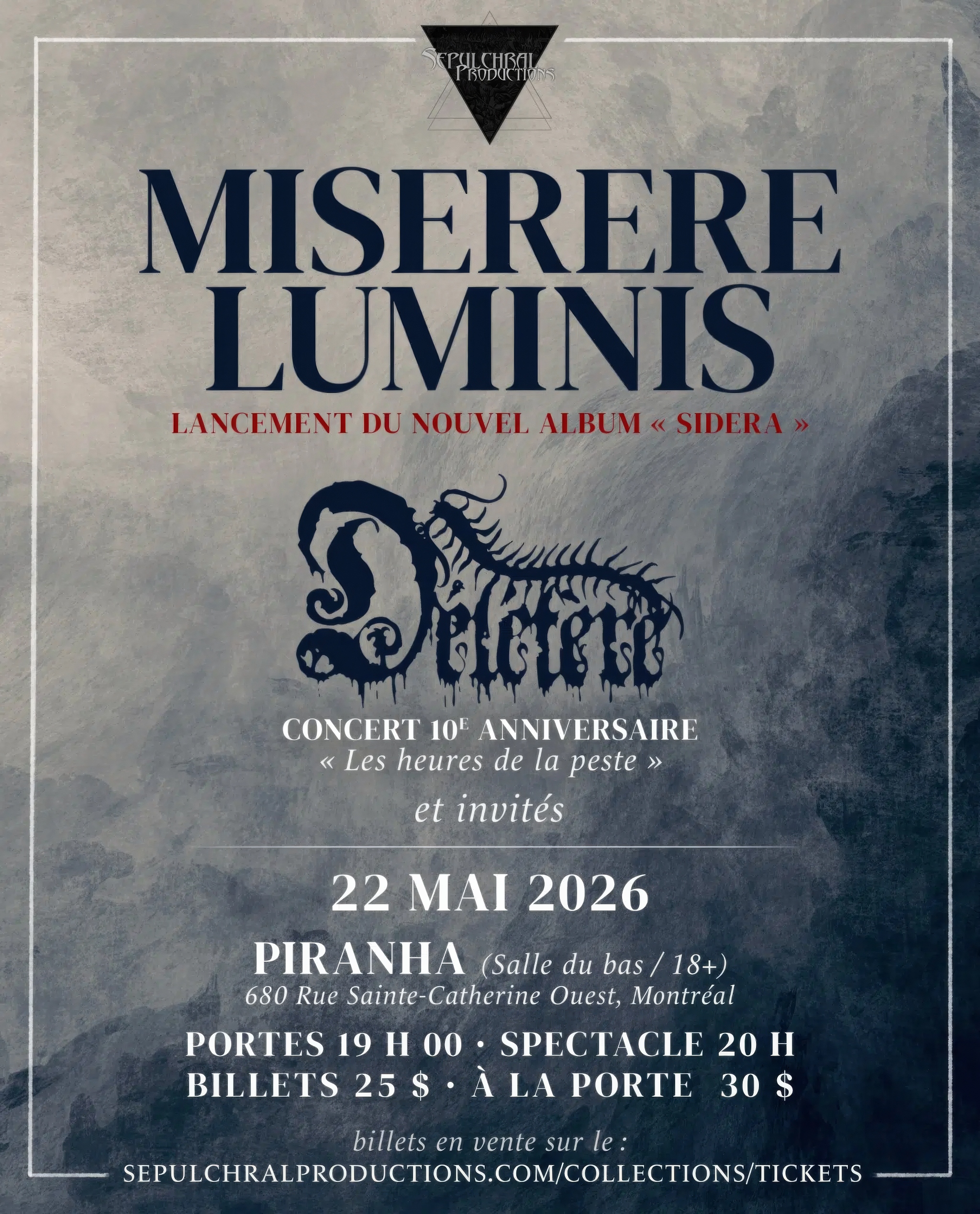
Adam Burke’s cover painting, with iridescent threads dissolving into dark, matches the music better than most album art manages. And when À la douleur de l’aube finally opens up, the band hit a kind of cold radiance that makes you want to go back and hear how they got there. Put this record on your list. Then put May 22nd in your calendar to witness these songs live.
Sidera will be released on March 6, 2026 via Debemur Morti Productions.
Miserere Luminis and Délétère play Piranha Bar on May 22.
Tracklist:
01. Les fleurs de l’exil
02. De cris & de cendres
03. Aux bras des vagues & des vomissures
04. À la douleur de l’aube
05. Dans la voie de nos lumières
MISERERE LUMINIS is:
Annatar – guitar, vocals
Neptune – guitar, bass, piano, texts
Icare – drums, vocals, strings


