
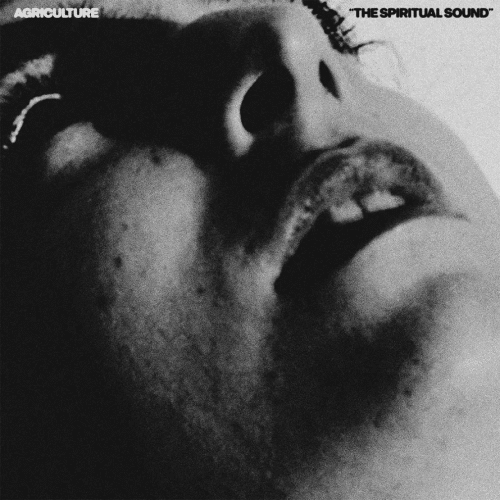
Agriculture have made a record that refuses to sit still. The Spiritual Sound opens with “My Garden,” and within seconds you’re caught in a riptide of distorted guitars that morph from slithering lead to grinding chug to full exorcism. The Los Angeles quartet call themselves an ecstatic black metal band, which feels both accurate and slightly beside the point. There’s black metal here, certainly, but there’s also nu-metal, shoegaze, post-punk, jazz breakdowns, and moments that sound like someone fed a folk ballad through a wood chipper.
What makes The Spiritual Sound compelling is how completely Agriculture commit to their own chaos. This is a band that wrote these songs, then tore them apart and rebuilt them from mismatched components. Guitarist Dan Meyer describes the process like character creation in a role-playing game: the head of one song ends up on the body of another. “Flea” opens with spoken-word vocals drifting over a driving punk beat before harsh shrieks split the mix wide open. A guitar solo arrives, melodic and bluesy, rooted in classic metal traditions, before the song dissolves into a post-punk passage that somehow leads to one of the album’s most satisfying crescendos. The band sent this to friends and got back reports of confusion. Meyer admits he’d be pretty baffled too, hearing it for the first time.
The album splits into two distinct halves, though not cleanly. The first five tracks skew more aggressive: blackened guitars, crust punk energy, screamo venom, noise rock accents. Agriculture hammer through “Micah (5:15am)” with a chorus that soars even as the rhythm section pummels underneath. “The Weight” is sludgy and doom-laden, feedback howling through distorted riffs. These songs are intimate in their hostility, close and suffocating. Then the brief title track, barely thirty seconds of ominous drone, acts as a threshold. Cross it and everything shifts.
“Dan’s Love Song” emerges from static with droning guitars and clean vocals that feel like standing on a beach at midnight. Vocalist and bassist Leah B. Levinson describes her lyrical approach as examining suffering and spirituality in quotidian terms, drawing from literature of the AIDS crisis, particularly David Wojnarowicz’s Close to the Knives. You hear that grounding on closer “The Reply,” where Meyer sings “Here I am / I can see my breath at the edge of the ocean” in a voice that sounds genuinely vulnerable. When the rest of the band crashes in like an oceanic wave, the song opens up completely.
“Bodhidharma” might be the album’s most divisive track. Named after the Buddhist monk considered the First Patriarch of Chan Buddhism, it toggles between near-silence and explosive catharsis. The quiet passages feature wavering vocals and drummer Kern Haug’s skeletal drum patterns, then the song erupts into tremolo-picked guitar heroics courtesy of Richard Chowenhill. His playing throughout this record is stunning. Trained as a composer in the classical tradition, Chowenhill cites influences ranging from Eddie Van Halen and Alexi Laiho to Hungarian composer György Ligeti, particularly his String Quartet No. 2. His solos manage to feel both virtuosic and emotionally necessary. His tremolo picking alone would make most guitarists weep with envy.
The narrative arc across The Spiritual Sound traces the story of Bodhidharma and Huike, the Second Patriarch of Chan Buddhism, though you don’t need to know that to appreciate how the songs connect. “Bodhidharma” bleeds directly into “Hallelujah,” which starts as stripped-back folk before bursting into colour at its conclusion. These tracks share lyrical and musical DNA, threading themes of impermanence and spiritual seeking through wildly different sonic approaches. Agriculture have always played with song cycles, tying narrative concepts into their music, and here that impulse reaches its fullest expression.
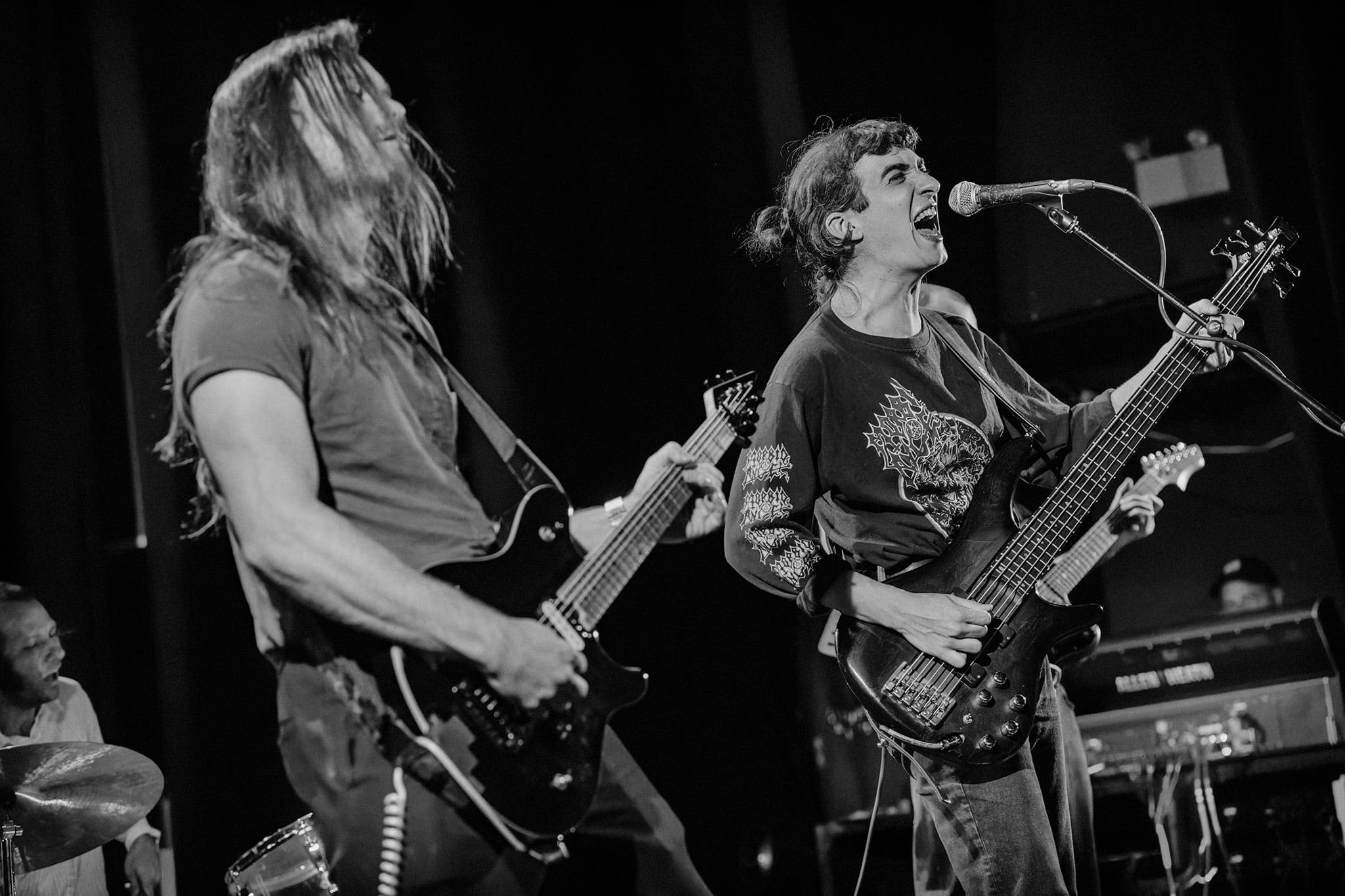
The band’s chemistry comes from their collaborative friction. Meyer and Levinson share vocal duties, often making it difficult to discern who’s screaming when. That ambiguity creates tension, a sense of multiple voices struggling to be heard. Chowenhill’s studio, affectionately dubbed “Richard’s kingdom,” is where the record truly came together, where the band added vocals, overdubs, and what they call “ear candy.” It’s also where they fought. Levinson describes the process as requiring them to set aside creative differences, to sit with discomfort and trust each other’s vision.
Closing track “The Reply” brings everything full circle. It opens with skittering drums that hint at unexplored territories before settling into hypnotic fuzz and Meyer’s fragile vocals. When the full band enters, bolstered by gorgeous backing vocals from Emma Ruth Rundle, the track becomes genuinely rapturous. The imagery stays grounded even as the music soars: breath visible at the ocean’s edge, the ceaseless waves. Meyer has talked about solving a songwriting problem on this record: how to write about things as they occur in life without overdramatizing them. In a world where musical sound is constant, where silence has become rarer than noise, Agriculture seem to understand that drama comes from contrast, from knowing when to pull back and when to let everything crash forward.
The Spiritual Sound doesn’t always cohere. Some of the middle tracks blend together on first listen, and there are moments where the band’s ambition outpaces their execution. But Agriculture have crafted something genuinely strange here, a record that treats black metal as a starting point rather than a destination. They share DNA with experimentalists like Blut Aus Nord, Liturgy, Zeal & Ardor, Oranssi Pazuzu, and Portal, but their approach feels more grounded, more interested in finding ecstasy in mundane moments than in cosmic transcendence. The band lists Metallica, Slipknot, the Jesus and Mary Chain, and Bob Dylan as primary influences on this album, which sounds absurd until you hear “Dan’s Love Song” and realize they’re serious.
There’s a playfulness to Agriculture that sets them apart from their more self-serious peers. The “ecstatic black metal” designation started as a joke someone made about their sound, and the band ran with it. That willingness to embrace absurdity while maintaining musical rigour gives The Spiritual Sound its strange power. This is heavy music that doesn’t take itself too seriously, even as it grapples with Buddhist philosophy, the AIDS crisis, and the nature of impermanence. Meyer, Levinson, Chowenhill, and Haug have created something that feels genuinely alive, capable of growth. The branches are extended, the buds waiting to bloom.
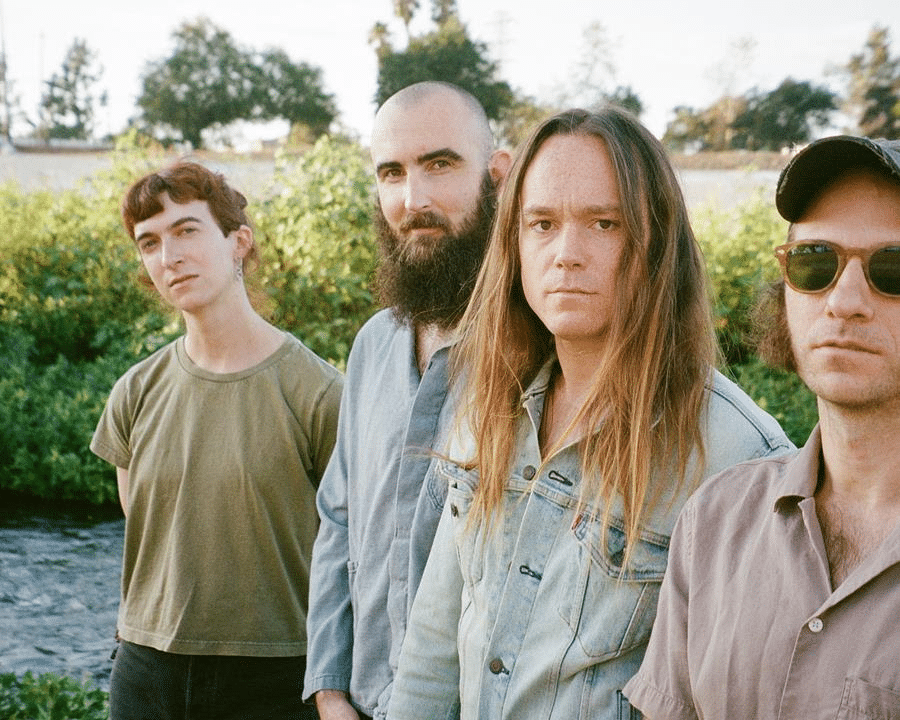
The Spiritual Sound is out October 3rd via The Flenser
Photos – Olivia Crumm, Milan Aguire & Steve Gerrard
Share this :


