
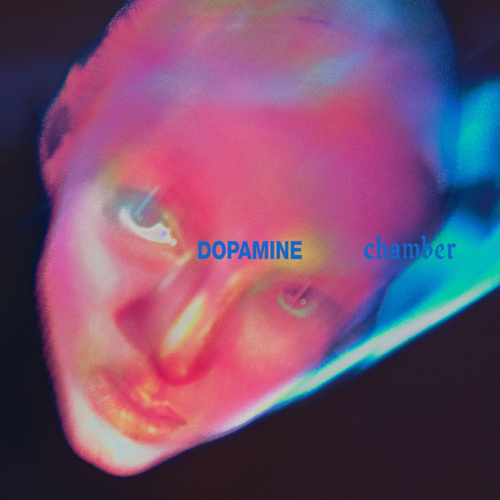
Six Shot Morning starts on a pulse. An electronic beat ticks underneath while the arrangement keeps widening around it, layer on layer, until the song is the size of a cinema screen. There are no guitars on it at all. Conor Deegan’s bass churns low, producer James Ford, back from Romance, lays cold chords over the top from an ARP 2600 synthesizer, and the whole thing moves with a slow, mechanical tread. Grian Chatten sings down in his baritone about Silicon Valley taking a photograph and two lovers promising each other a million years. It sets the tone for the next 10 tracks, and that tone has very little to do with the band that wrote Boys in the Better Land.
Fontaines D.C. have been walking away from that sound for a while. Romance (2024) brought synthesizers and strings into the Dublin five-piece’s guitar music; Dopamine Chamber, their fifth album, goes further. Chatten has said Romance felt roughly 60 per cent human, and that on this record “the mask is wearing the face a little more.” Some of these songs owe more to Depeche Mode than to Dogrel. Speaking as a Depeche Mode fan, that suits me fine. Montreal has watched the change happen in person: Osheaga in August 2019, a headline show at the Corona Theatre in May 2022, an opening slot for Arctic Monkeys at the Bell Centre in September 2023, and a sold-out MTelus in October 2024, their biggest headline show in the city so far.
The music came first this time. The band wrote most of it together in London over the winter of 2025, and Chatten added the lyrics afterward on a short trip through Vienna and Venice, writing inside frescoed churches while tourists dragged suitcases across the squares outside. The record was once going to be called Submission. His 2023 solo album, Chaos for the Fly, slipped past a lot of Fontaines fans; it shouldn’t have. He told MOJO he has a few songs toward a second one and expects it to be “a lot more lively.”
Marianne, the lead single, comes second, and it may be the catchiest song on the record. Strings spiral, the snare lands hard and heavy, and synths pulse underneath while Chatten, barely above a whisper, offers to help someone vanish. The hook makes the offer very hard to refuse. Mimesis is where the Depeche Mode comparisons pile up, and with reason: it has a strong Enjoy the Silence feel, carried on a rubbery, New Order-style bassline and bright 1980s synth-pop sheen. Chatten sings about a world where everyone is depressed and running in place, then turns and offers to take someone’s side. The band’s edge survives the resemblance.
Happy For You plays a longer game. It opens gently on a chorus-effected guitar figure with a sour, lonely The Cure twang to it and builds slowly, while Chatten tells a breakup story that ends with a bunch of flowers and, on the way out the door, a key dragged along the partner’s car. Then, about halfway through, the whole band stamps on their distortion pedals at once, and the heaviest moment on the album arrives, a burst of big riffs that is gone within seconds. Nothing else on the record goes back there. With the tempo held down from start to finish, a few more of those jolts, or one properly fast song, would have been welcome.
Demolition comes closest. It’s a grinding, Nirvana-weight grunge track with a fuzzed electronic edge, Chatten snarling an invitation for the callous-hearted to get comfortable inside his horror show. Tongue, the album’s second single, slows everything into trip-hop: nervy synth chirps over a sluggish, heavy drum thud, close to Massive Attack around Mezzanine, before a piano figure rolls in that sounds lifted from a 1990s New York hip-hop record. A blunt, two-note metallic guitar solo cuts through near the end. The slouching bass comes from Deegan, who used a tape-speed technique borrowed from Prince, the same one he used on You Miss Me, while Chatten delivers a stimulant-fuelled apology for a phone call that shouldn’t have happened.
At the centre, One Man strips the band away. For its first two minutes there’s nothing but strings and keyboard effects, then acoustic guitars and a rolling drum pattern ease in, and Chatten’s voice sits right at the front, carrying the album into its second half. It’s also where the title comes from: a line about a dopamine chamber built to kill the pain, and a feeling that won’t let go once it has a name. His voice has never sat more comfortably. Chatten has said he now sings closer to his speaking range rather than pushing upward the way he did on the early records, and he cut these vocals in Palermo, in a booth he and Ford built out of mattresses and cushions. As the strings fall away at the end of One Man, you can hear children playing football outside Palermo Cathedral.
Where Is Gone? follows, a duet with Rosalía, the first guest vocalist on any Fontaines D.C. album. A Catalan pop star was an unexpected call for a Dublin band, and her voice turns out to belong in the song. It’s a slow, orchestral 1960s-style ballad with the widescreen sweep of an Ennio Morricone score: soft strings, drummer Tom Coll playing ever-changing fills, an acoustic guitar taking over as it goes, and the two voices winding around each other. She recorded her part on tour in America and sent it back within 48 hours. Carlos O’Connell, who has been reconnecting with his Spanish heritage, helped make the connection. Chatten spent the making of the record listening to the 1960s albums of the Italian singer Mina, and this is where that habit is closest to the surface.
The back half turns to relationships gone wrong. You Miss Me creeps through a shadowy 1980s goth verse, the narrator hinting that his partner’s good mood is something he supplies from his own pocket, before the chorus opens up with a loose, baggy stomp and stabbing strings. Japan, the penultimate track, is the plainest song here: an acoustic, arms-in-the-air singalong with a simple melody that recalls early Oasis and the moodier end of Arctic Monkeys, though the lyric describes a couple who are each using the other. Ford gives all of it a big, spacious sound, and the songwriting stays varied across the whole tracklist even without a change of pace. Every player has moved. Coll layered 1980s and Soviet-era drum-machine samples with his live playing, O’Connell expanded his synthesizer station, and Conor Curley went looking for guitar sounds that didn’t point straight back at the past. The band wrote around 40 songs to arrive at these 11, finishing them with Ford during residential sessions in the Suffolk countryside.
Intimate closes the album in slow motion, all swirling synths and rising hiss, as Chatten takes aim at the beauty kings and queens with private means, left looking over the ruins of the human dream. A refrain promising to stay at someone’s side through the night keeps returning as the music sinks. It does the job of an ending without being one of the stronger songs, and its last stretch needed more movement than it gets. Chatten sings about a colourful ending, pretty in the final scene, and then the song simply fades out, like a phone screen left untouched until it dims.
Dopamine Chamber will be released on 16 October 2026 via XL Recordings.
Fontaines D.C. have no Montreal date on their 2027 tour. The closest stop is Toronto’s Scotiabank Arena on 26 September 2027.
Photo – Ewen Spencer
Share this :


