
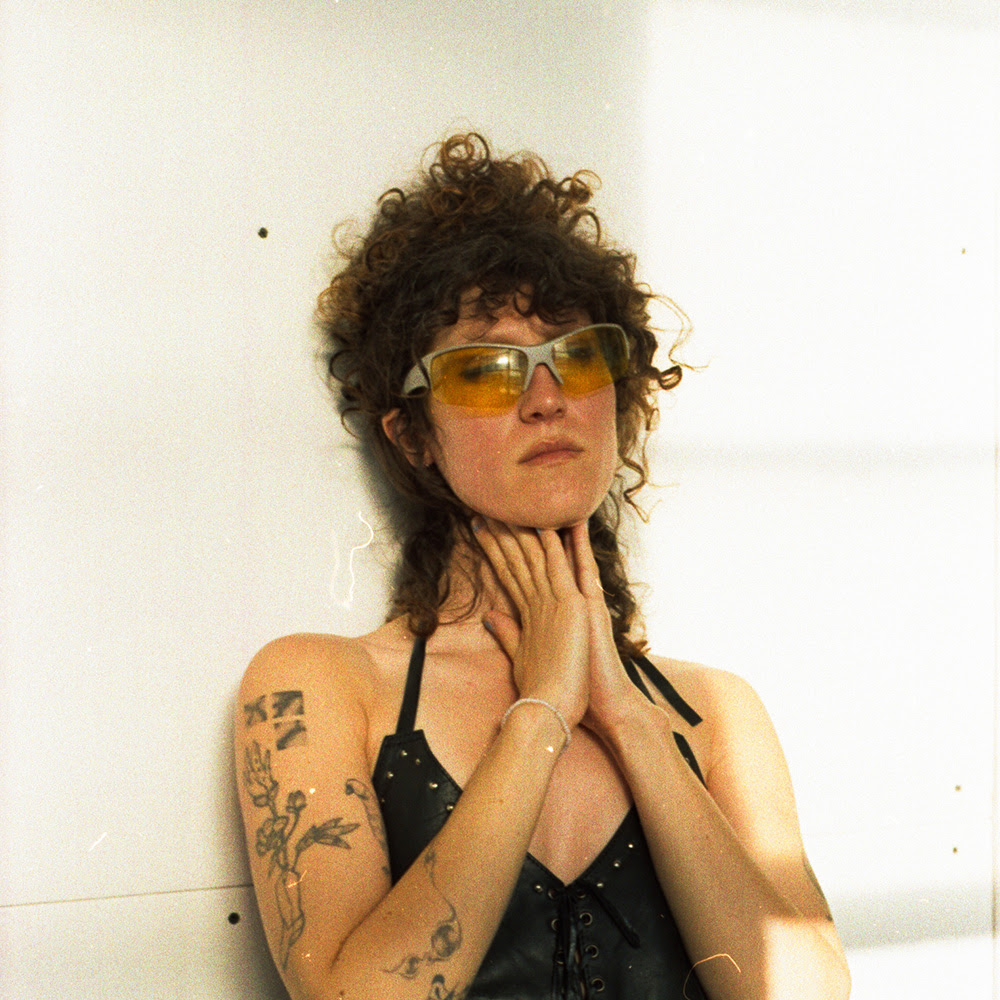
Squirrel Flower, the moniker of American indie musician Ella Williams, comes from a nickname she gave herself as a child. Williams started making music in Boston before moving to Iowa to pursue a double degree in studio art and gender, women’s and sexuality studies, all the while releasing music and going on DIY tours. In Iowa she self-released her first EP, Early Winter Songs From Middle America (2015), and subsequently two EPs and four studio albums. In 2021 Williams relocated to Chicago where she sublets a room — for now.
Squirrel Flower’s latest album release, Say a Prayer to the Gods of Getting Going, describes the push and pull between leaving and staying. Its titular track wonders, “I feel glory passing by / In five years what will be growing? / Can I water the concrete?” With 70s folk lyricism, Say a Prayer interrogates domesticity, love, nomadism, and solitude against a sonic backdrop of fuzzy guitar lines that capture expansive Midwestern landscapes.
Williams is thoughtful, soft-spoken and pensive. She doesn’t buy into the idea of chasing a scene; rural Iowa was an important place to grow as a musician, and she believes that time and space are indispensable to creation.
Read our full interview below.
IW: The first song of yours I ever listened to was your cover of Caroline Polachek’s “So Hot You’re Hurting My Feelings.” Were you going through something?
SF: I recorded that at the start of COVID, so yeah, I was going through something. It was four or five days into my first official headlining tour, my first booked tour with an agent. We played in New York and we knew it was going to be the last show of the tour. It was like, March 11, 2020.
We played that cover without practicing it at all, it was really fun. I got home to my parents’ house in Boston and recorded it in their basement and released it. Then it turned into a whole thing where people liked it and listened to it a lot.
Your album is called Say a Prayer to the Gods of Getting Going. Within it you also reference the gods of staying still. Could you tell me what that means to you?
There’s always been this tension between movement and stasis and struggling trying to find the balance between the two of them. I wrote the record in a period of time where I was not finding the balance and in constant movement. I took nine months off of touring and had gotten so used to the rhythm of it that I didn’t know how to be still in any way, to rest and cultivate other parts of my life.
It didn’t feel like a negative thing. I found myself feeling grateful for the ability to get up and leave any situation. But saying a prayer also to the gods of staying still is important. I think I realized that, through the process of writing the record.
I’ve spoken about this idea with other women. We are experiencing the social pressure to settle, but also this deep feminine urge to exist with a sense of solitude and freedom.
Yeah, I mean I resonate more with the deep feminine urge to exist in my solitude and freedom and independence. The main driving force in my life is the creative drive and also my own freedom and independence. I still don’t have a permanent place to live. I’ve been subletting a place for the summer. This week I’m moving all of my belongings into storage and going on tour. I’ll be on the road for two months. Then I’ll be on the East Coast visiting family and friends for a month and a half. And then I have no idea what is next.
The record is all very much in this realm of dealing with the pressures of domesticity and also the pressures of not having a domestic life. What love can look like in these different ways of living. The light and also the darkness in living like a more transient lifestyle.
Was this the intention around which you built the record?
No, the record was sort of built around a sound. But in terms of the concept and the content, I was shown what the record was about when it was finished. This always happens. Like every single record I make, I don’t really know what it’s about and I don’t know what the through line is until it’s done. I’m able to learn from the songs what they’re about and then how they connect with each other.
What were the places and musical influences that sonically shaped the record?
The physical places that inspired the record are all named in the song “Highway Woman.” All of these places that I spent time in. In the Southwest, at an artist residency in New Mexico. I lived there for a month in a storefront that was converted into an art studio with a bed and a little kitchen and a bathroom in this 9,000-person town. I wrote a lot of the songs there. In California, at a friend’s home studio. New England and the Northeast and obviously the Midwest.
The biome of the Midwest and the Rust Belt is really present in the sound. I’m interested in capturing the emotion that I’m trying to convey with the lyrics through sound and production. The first song on the record was me trying to capture how it felt to be in the desert in this massive expanse. You’re looking at all of these ancient mountains and rocks, and you know that it used to be the bottom of the ocean but it’s no longer. It’s this feeling of being able to experience past, present, and future all at once, all of this ancient material that will exist for so much longer. I wanted to capture that with the guitars.
Other sounds on the record were inspired by classic 70s music. I was listening to a lot of Bob Dylan and Joni Mitchell, a lot of Townes Van Zandt and Linda Ronstadt. Classic songwriters who also use themes of travel and land to explore something a little deeper about the psyche and about relationships.
There is this perception that in order to grow as an artist you want to be in LA, New York, London, where the industry and everyone else is. That doesn’t seem to be a goal of yours.
I think that that is a myth. It’s not true. My musical career started to blossom when I moved to rural Iowa. Bands would come through and there were not that many local artists and I would open for them. I opened for Big Thief while I was there in 2017. I opened for Jay Som, I opened for Moses Sumney, I opened for Julien Baker. If I had been living in New York, there’s a million and a half bands to choose from to open a show.
There’s something to be said for being in a place that is overlooked, that is not bothered by these greater industries. There are great things about being in New York or LA or London, I like all of those places. But in terms of trying to break into a scene… those places are so saturated. They’re also so expensive and it doesn’t allow time and space to create.
I think time and space are the two most important things in the creative process. I would rather be in a place that has more of an underbelly and has interesting things going on because people have time and space to explore and it’s not as much of a pressure cooker.
I owe a lot of my musical success to the period of time that I lived in Iowa.
Is there a song on the record that you feel a particular deeper connection to?
“Highway Woman” and “Fought a Hornet” are the two songs that come to mind. “Highway Woman” was one of the last songs I wrote on the record. I realized that it was about the process of making the record. That song ‘s about me, but it’s also not about me. It’s about some specific women in my life. It’s about many, many other people. That song is maybe the most vulnerable and true of a song that I’ve ever written.
“Fought a Hornet” is a little more mysterious and shrouded in the lyrics and content matter. That song came out of the depths of my soul, to be honest. The guitar part came before the lyrics came, which is not usually how it happens for me. I wrote it initially as an instrumental guitar piece and on my late grandfather’s old classical, nylon-string guitar. I was trying to connect with him through that piece. Then I put words to it, but the words were all improvised. I just hit record and sang over it and then that was the song.
Was music always the plan for you?
Pretty much. I’ve been a musician since I was born. When I was in college I thought I would go into fine art or academia. I was doing DIY tours and recording and releasing music, but I didn’t really think about it being my full time life path. Around graduation, I realized that academia and the visual arts always felt like an uphill battle for me, while music felt like the path of least resistance.
I graduated in the winter of 2018 and got offered to open a European tour for Adrianne Lenker because I had opened for Big Thief and she really liked it. It gradually built up from there. Now I don’t really intend on doing anything else and I can’t really do anything else anyway.
One more thing — I think your merch is great, especially the off-shoulder baby tees… have you been wearing your own merch?
Aren’t they so cute? I got my sample shirt a few days ago and I literally — well, I changed my outfit today — but I’ve been wearing it for days.
I’m really stoked to come back to Montreal and I’ve been playing there for so many years. The first time I played there was 2017 at Brasserie Beaubien. I was 20, I think. I’ve played so many shows there since then and I’m really excited to come back.
We’re excited to have you. Best of luck with your tour.
Thank you.
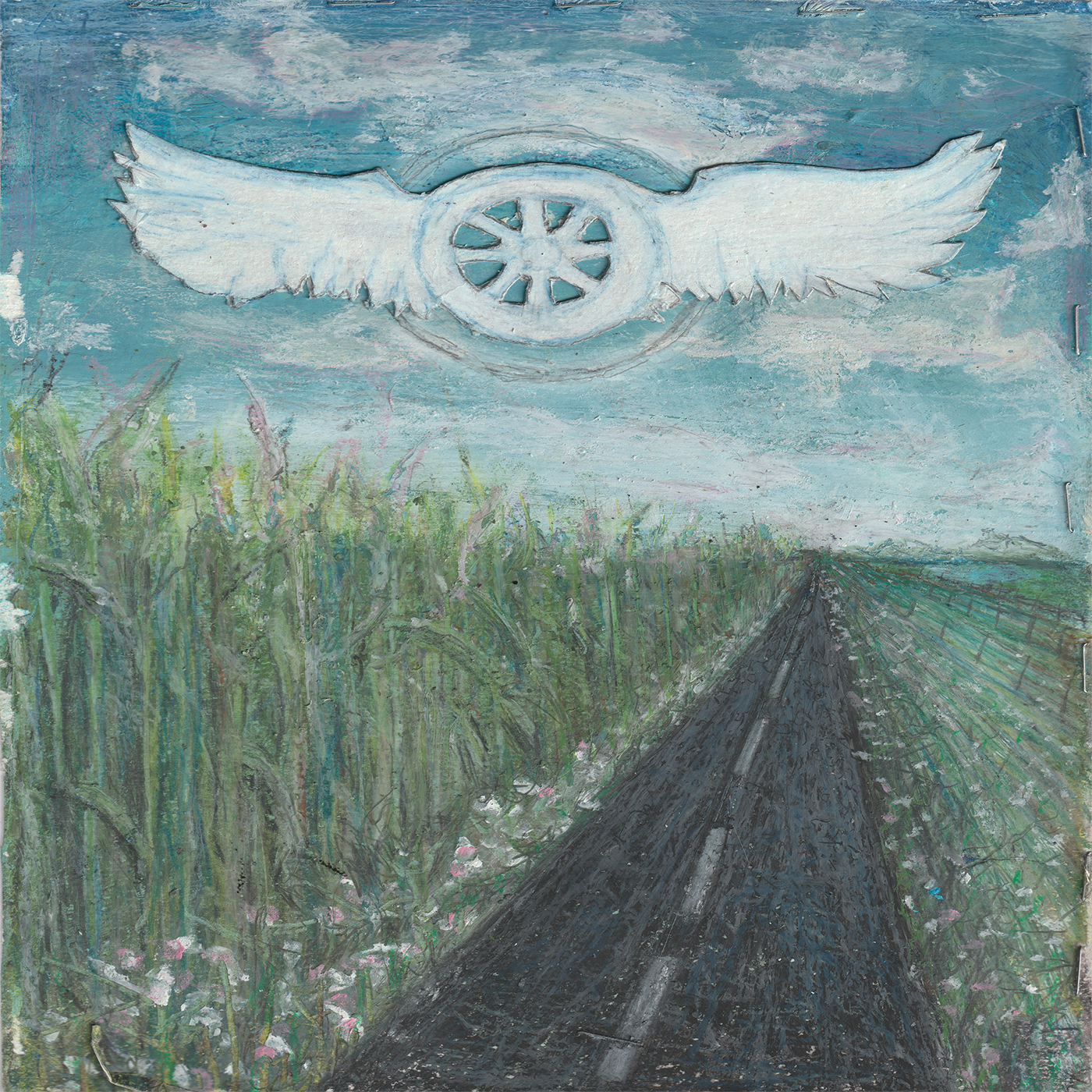
Artwork by Tate Shockely
Squirrel Flower comes to Montreal on September 25, 2026 – TICKET LINK
TOUR DATES
LISTEN TO SAY A PRAYER TO THE GODS OF GETTING GOING
Interview and words by Irene Wang
Main image by Daniel Topete


