

On a sold-out Friday night at Club Soda, Montreal metal fans were spoiled for choice. Despised Icon had already claimed the room for the weekend with two more sold-out shows to come, but first, the city turned out in force for a stacked bill featuring CATTLE DECAPITATION, ABORTED, FROZEN SOUL, TRIBAL GAZE, and Grindmother. It felt like Montreal reminding everyone, again, why it remains one of North America’s most dependable extreme metal towns.
Grindmother opened proceedings with immediate authority. There is no novelty act energy here, no wink or nudge required. Her presence commands attention, but what hit hardest was the seriousness with which the room responded. People leaned in, fists raised, heads nodding. The brief appearance by Montreal’s own Alissa White-Gluz, joining Grindmother for a handful of songs, pushed the moment from memorable to genuinely moving without turning it into a spectacle. White-Gluz did not upstage or grandstand. She blended, supported, and sang with clear respect, a local hero lending weight rather than stealing focus.
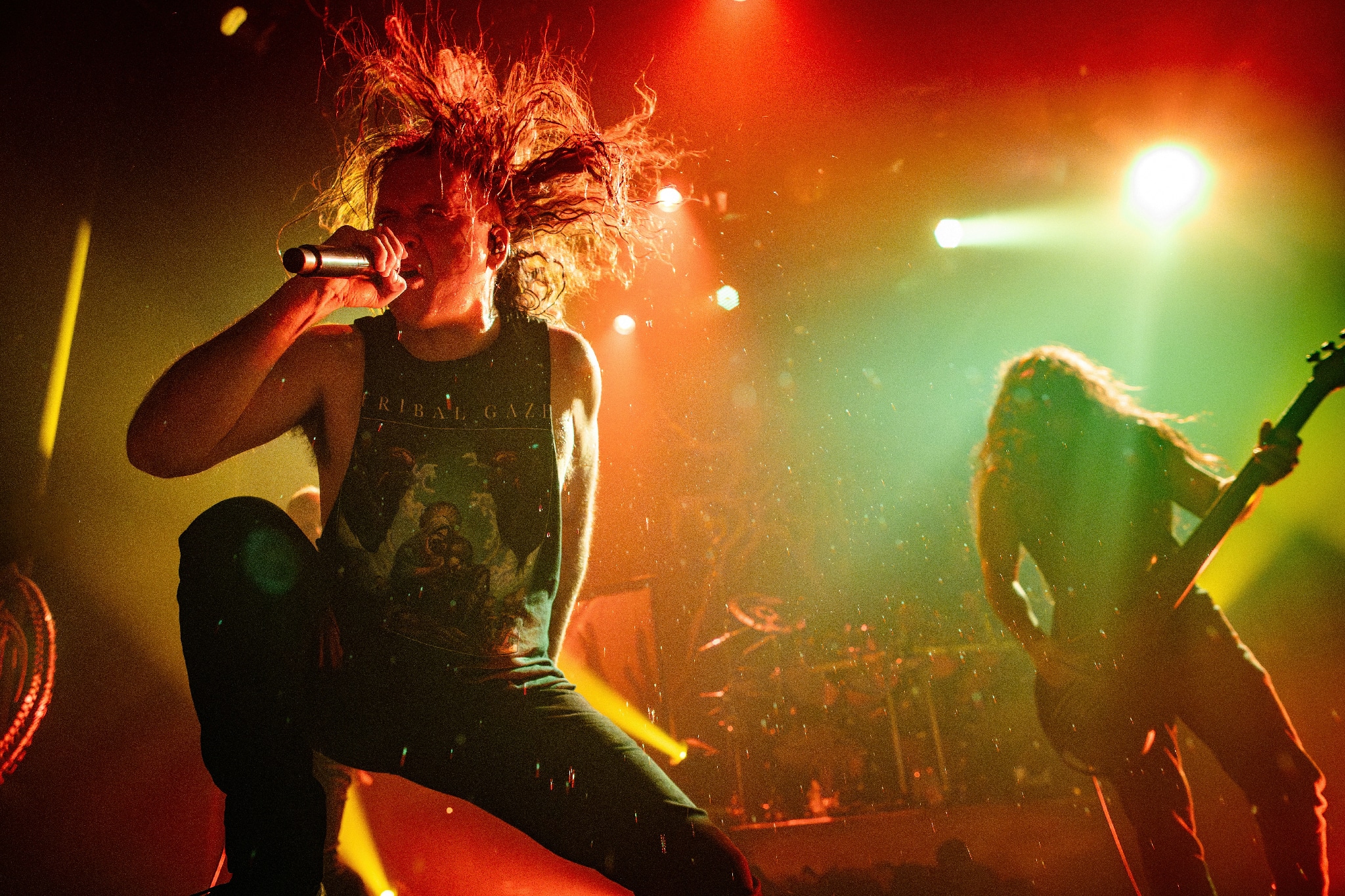
Texas death metal outfit TRIBAL GAZE followed and immediately shifted the room into motion. Their sound is rooted in classic death metal heft, but with a hardcore-leaning physicality that translates cleanly to a live setting. Riffs landed thick and blunt, drums snapped with intent, and the pit woke up fast. There was no overthinking at play here. Songs came and went with purpose, designed to hit hard and move on before indulgence could set in. For an early slot on a long night, it was exactly what the room needed.

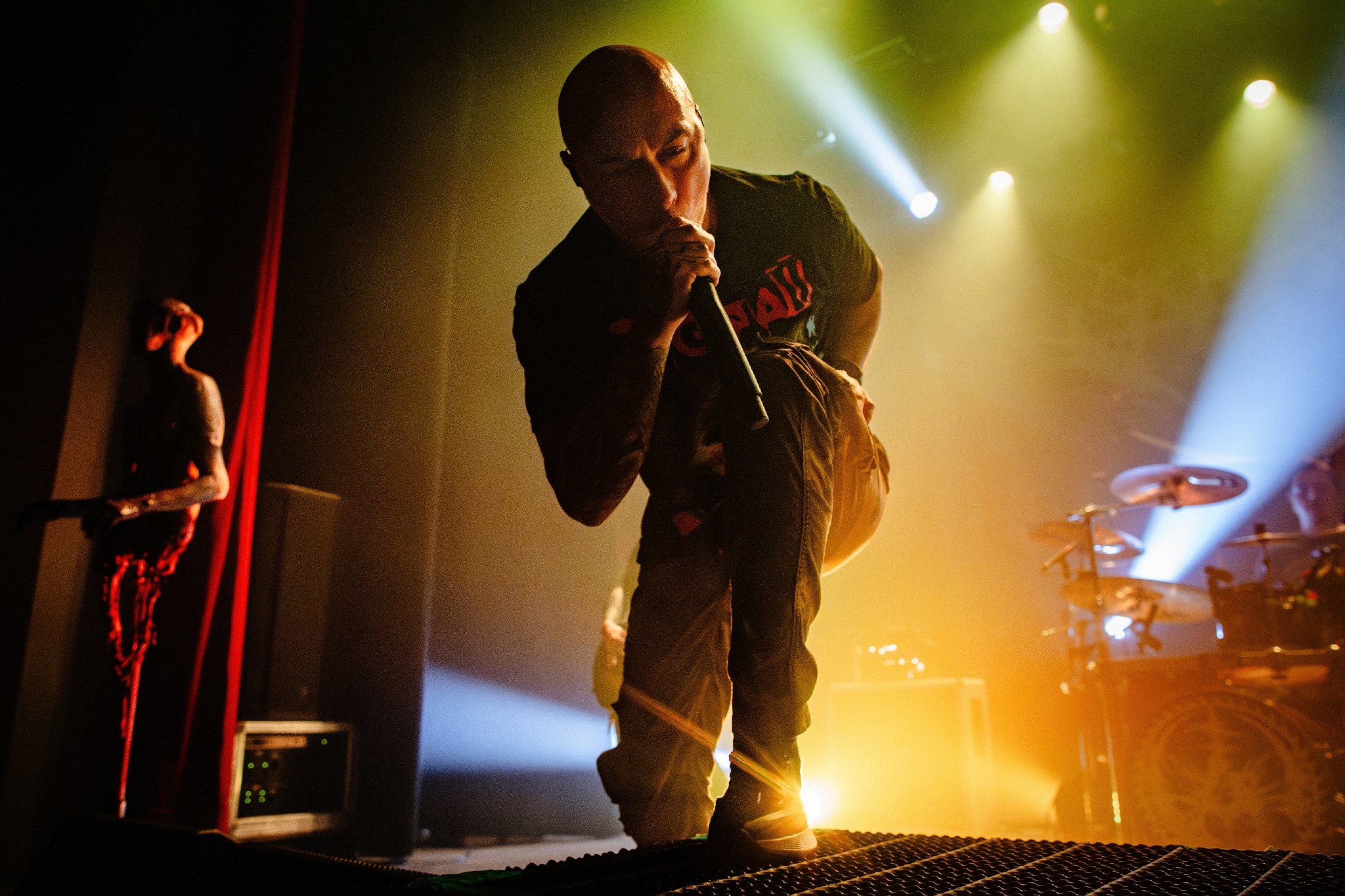
FROZEN SOUL took that momentum and slowed it down just enough to make it heavier. Their Bolt Thrower-informed approach thrives on mid-tempo crush and repetition, and live, it worked particularly well in Club Soda’s tight, echo-friendly space. Vocalist Chad Green carried himself with easy authority, steering the crowd with simple cues rather than theatrical excess. The band’s newer material blended seamlessly with older songs, suggesting a group that knows its lane and is comfortable refining rather than reinventing.


By the time ABORTED hit the stage, the room was primed for chaos. Sven de Caluwé remains one of extreme metal’s most effective frontmen, not because of technical prowess alone, but because he understands pacing, humour, and control. His banter worked as comic relief without deflating the intensity. The band tore through their set with precision and speed, guitars locked in tight, drums relentless. What stood out most was how naturally the older material sat beside newer songs. There was no competition between eras. Everything felt like part of a single, evolving identity. The pit responded accordingly, erupting on cue but never tipping into genuine disorder. For all the violence suggested by the music, the vibe in the room remained cooperative and oddly cheerful.


That collective anticipation paid off when CATTLE DECAPITATION finally took the stage. Touring in support of a full performance of Death Atlas, the band approached the set with focus rather than ceremony. The opening run, beginning with Anthropogenic: End Transmission and moving straight into The Geocide, was punishing and direct. Travis Ryan’s vocal performance was as extreme as advertised, cycling through guttural lows, piercing shrieks, and warped melodic phrases with unsettling ease. Live, his voice feels less like a single instrument and more like a rotating cast of characters, each one sounding increasingly fed up with humanity’s ongoing mess.
Death Atlas remains one of the band’s most cohesive statements, and hearing it performed in sequence underscored just how carefully structured it is. Songs like Be Still Our Bleeding Hearts and Vulturous hit with particular force, their shifting tempos and dynamic swings keeping the set from feeling like a blunt endurance test. Bring Back the Plague drew one of the loudest reactions of the night, its darkly ironic pandemic-era imagery still resonating without feeling dated. Rather than leaning on shock value, the song now plays like a grim historical document that somehow keeps finding new relevance.

Musically, the band were locked in. Guitarists Josh Elmore and Belisario Dimuzio traded riffs with surgical precision, never letting the technical demands overshadow the sheer physicality of the performance. Drummer David McGraw was a constant engine, navigating blastbeats, grooves, and sudden shifts with control that made even the most complex passages feel grounded. The rhythm section gave the songs space to breathe without softening their impact, a balance many bands in this genre never quite manage.
As Death Atlas moved toward its conclusion with Time’s Cruel Curtain, The Unerasable Past, and the title track, the room seemed to collectively exhale and then brace itself again. The emotional weight of the material came through clearly, not through speeches or theatrics, but through delivery. Ryan’s brief melodic passages cut through the noise with unexpected clarity, giving the heavier moments more contrast rather than diluting them.

The encore, pulling from Terrasite, served as a reminder that Cattle Decapitation are not a band content to live in the past. A Photic Doom, We Eat Our Young, and Scourge of the Offspring hit hard and fast, offering a sharper, more immediate aggression that contrasted nicely with the sprawling arc of Death Atlas. It was a smart way to close the night, forward-looking without abandoning the evening’s central theme.
By the time the lights came up, sweat-soaked and ringing ears were shared badges of honour. This was not a night defined by spectacle or surprise appearances, but by execution, pacing, and a deep understanding of audience and place. Montreal showed up, the bands delivered, and Club Soda once again proved it can handle the heaviest nights without losing its intimacy. This was a reminder that when everything lines up, extreme music can feel less like an escape and more like a shared reckoning.






Review & Photos – Steve Gerrard
Share this :


