
There’s something beautifully absurd about watching sixty-somethings launch themselves skyward with the enthusiasm of teenagers discovering amphetamines. Yet there I was at MTelus on Friday night, surrounded by greying heads bobbing like maritime buoys as The Pogues delivered a masterclass in controlled chaos that would have made their late, great Shane MacGowan raise a glass from wherever wayward poets go to rest.
The evening began with Shane Murphy‘s blues trio, a perfectly competent outfit that felt about as connected to what followed as a vicar’s sermon before a pirate raid. Murphy’s delta-style guitar work had the technical chops, but his snake-shuffling approach seemed designed to lull the crowd into false security. The audience, wisely sensing what storm was brewing, spent most of his set conserving energy like marathon runners before the final sprint.

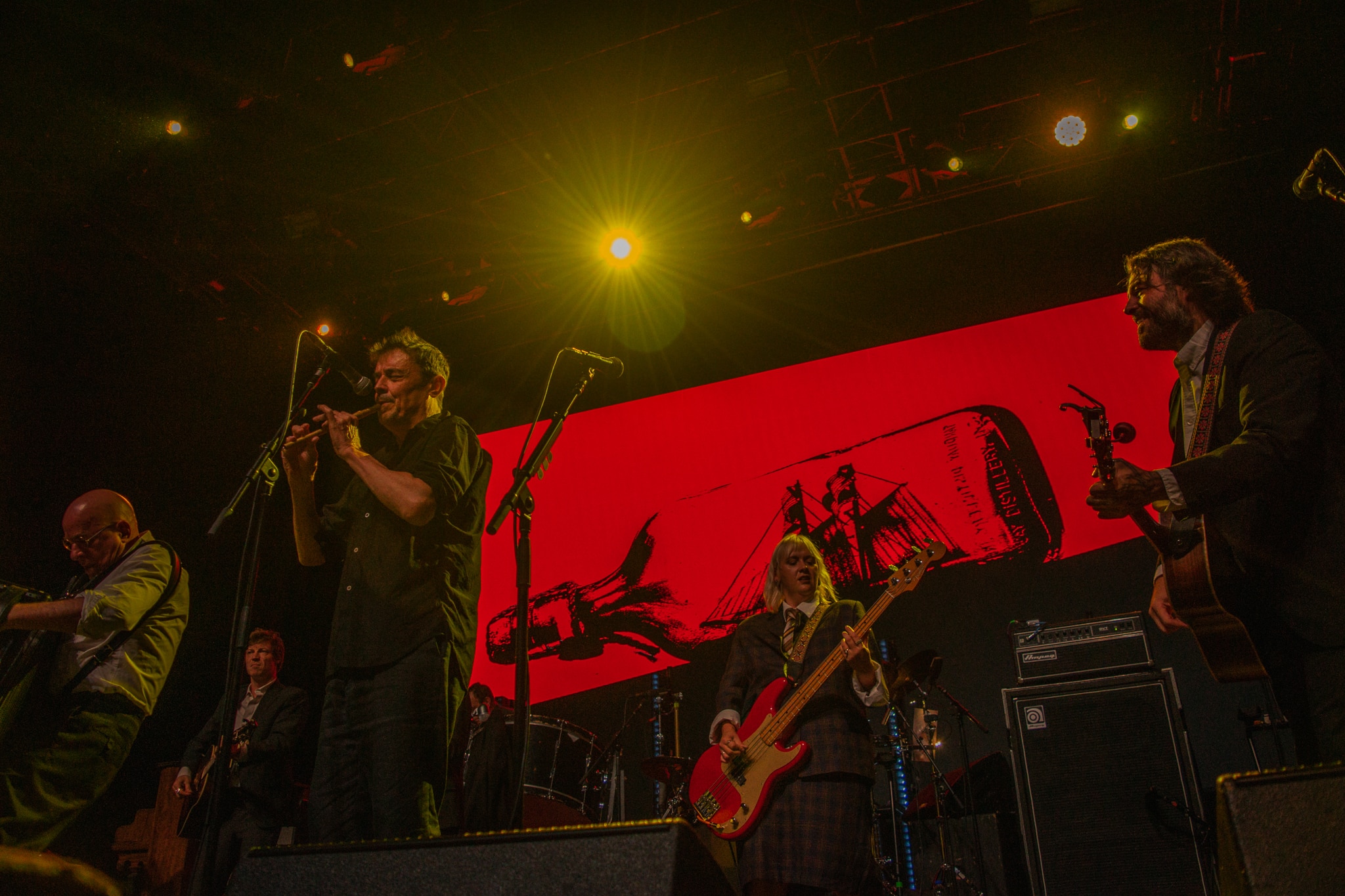
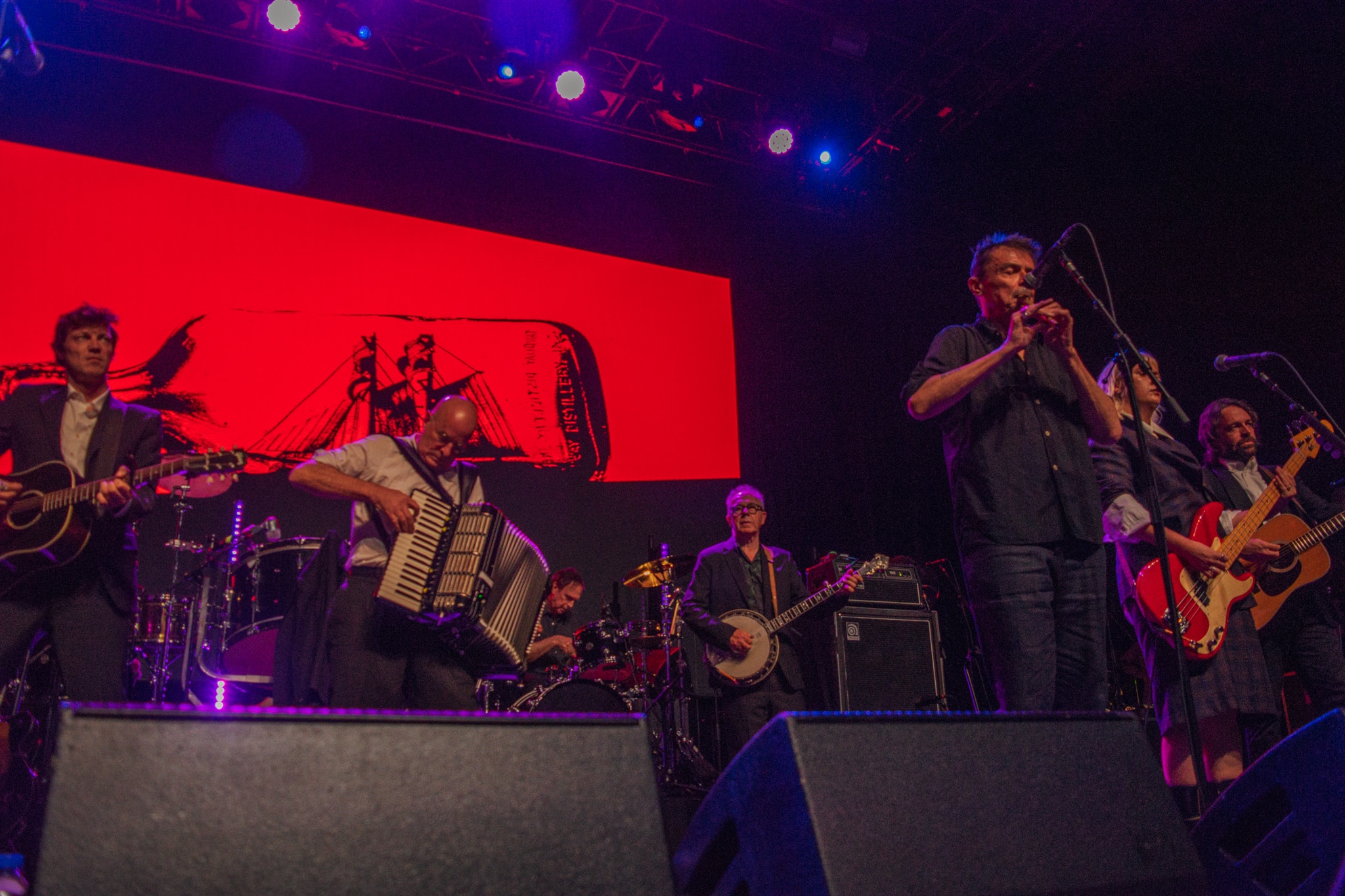
The real preparation came during the changeover, as the PA system transported everyone to 1980s Britain with a carefully curated playlist. Billy Bragg and The Clash crackled through the speakers while impromptu singalongs erupted across the venue. By the time The Pogues’ simple backdrop appeared—a ship in a bottle, perfectly capturing their ethos of explosive tradition—the room was primed for mayhem.
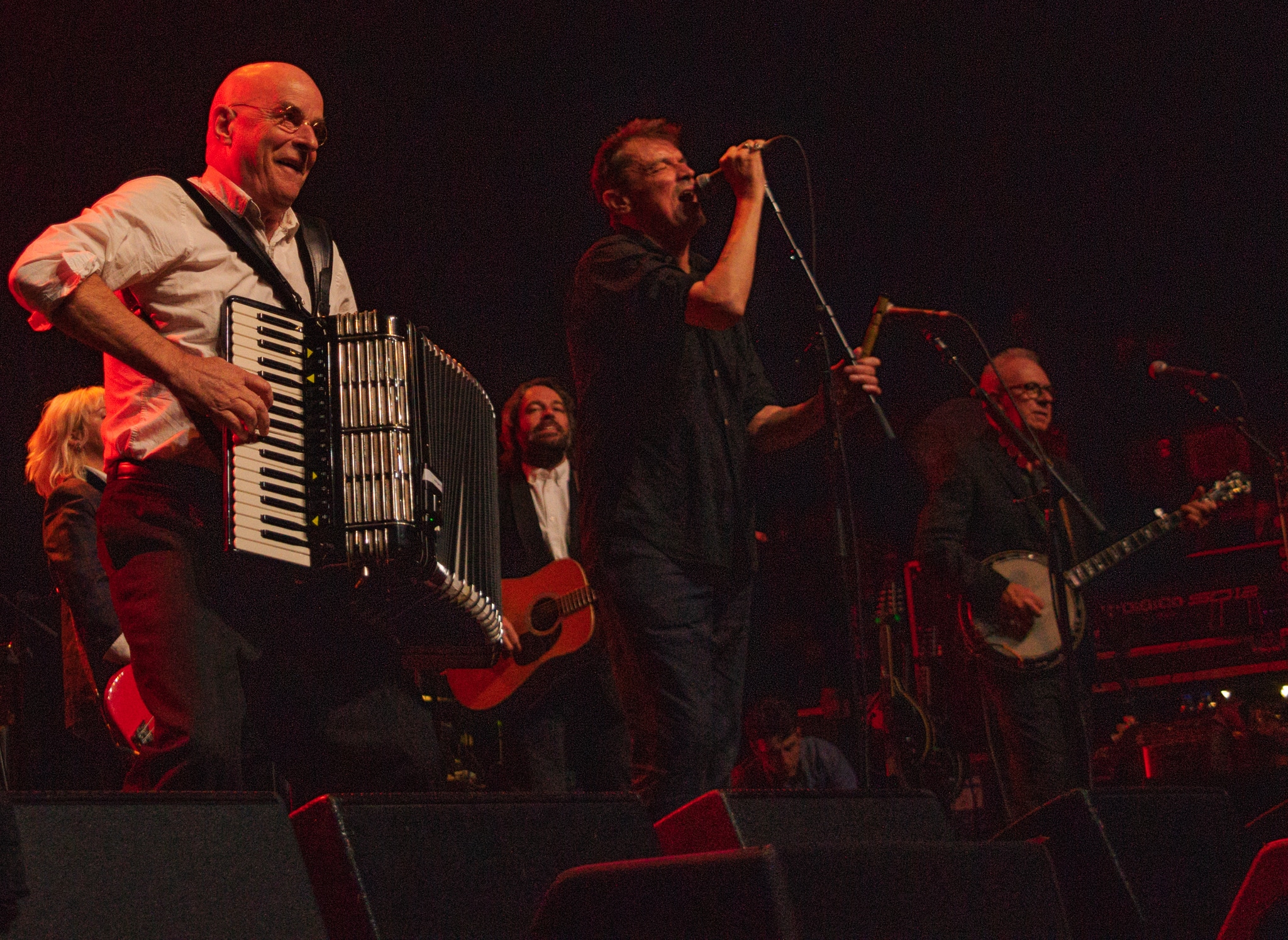
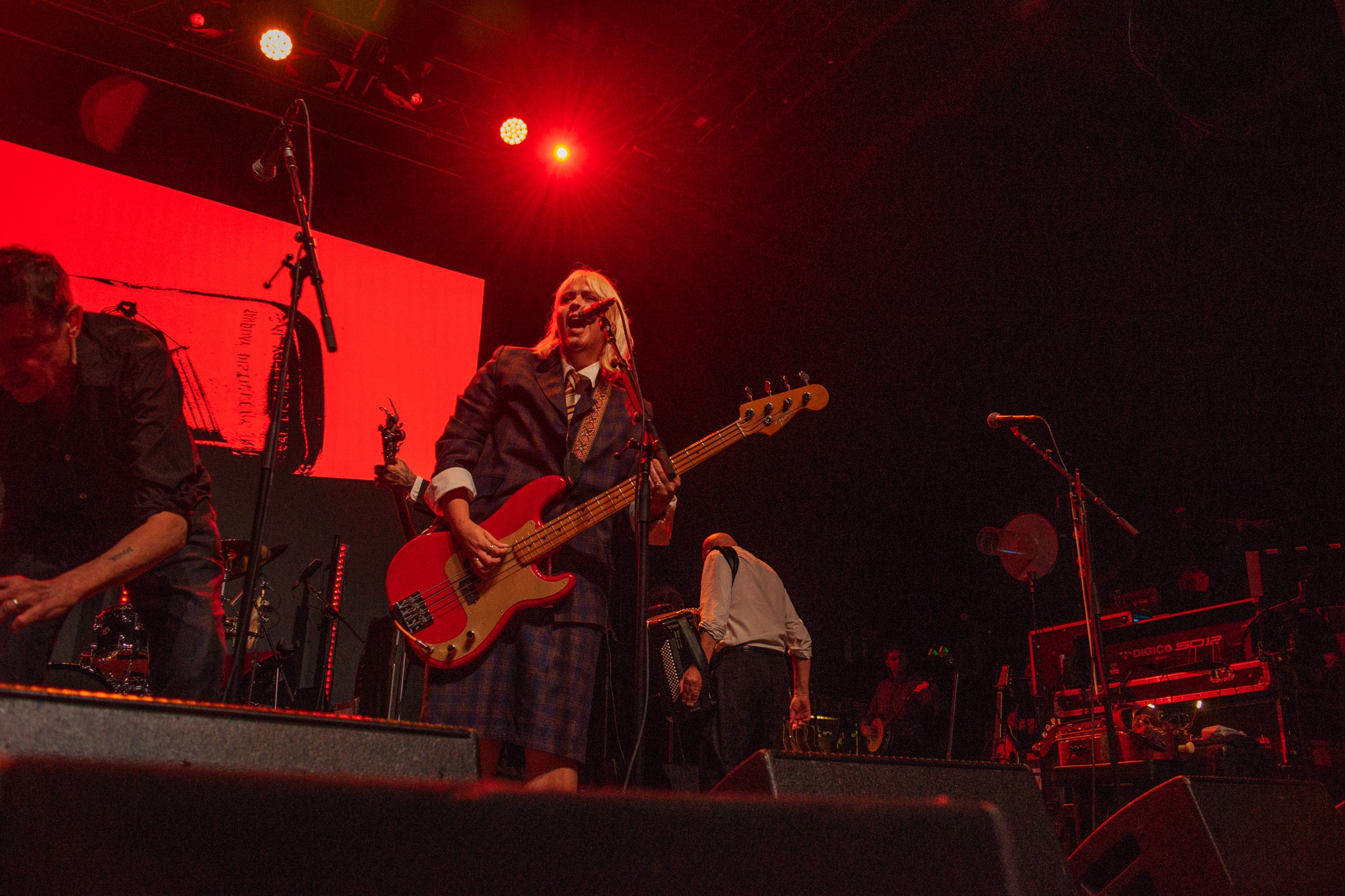
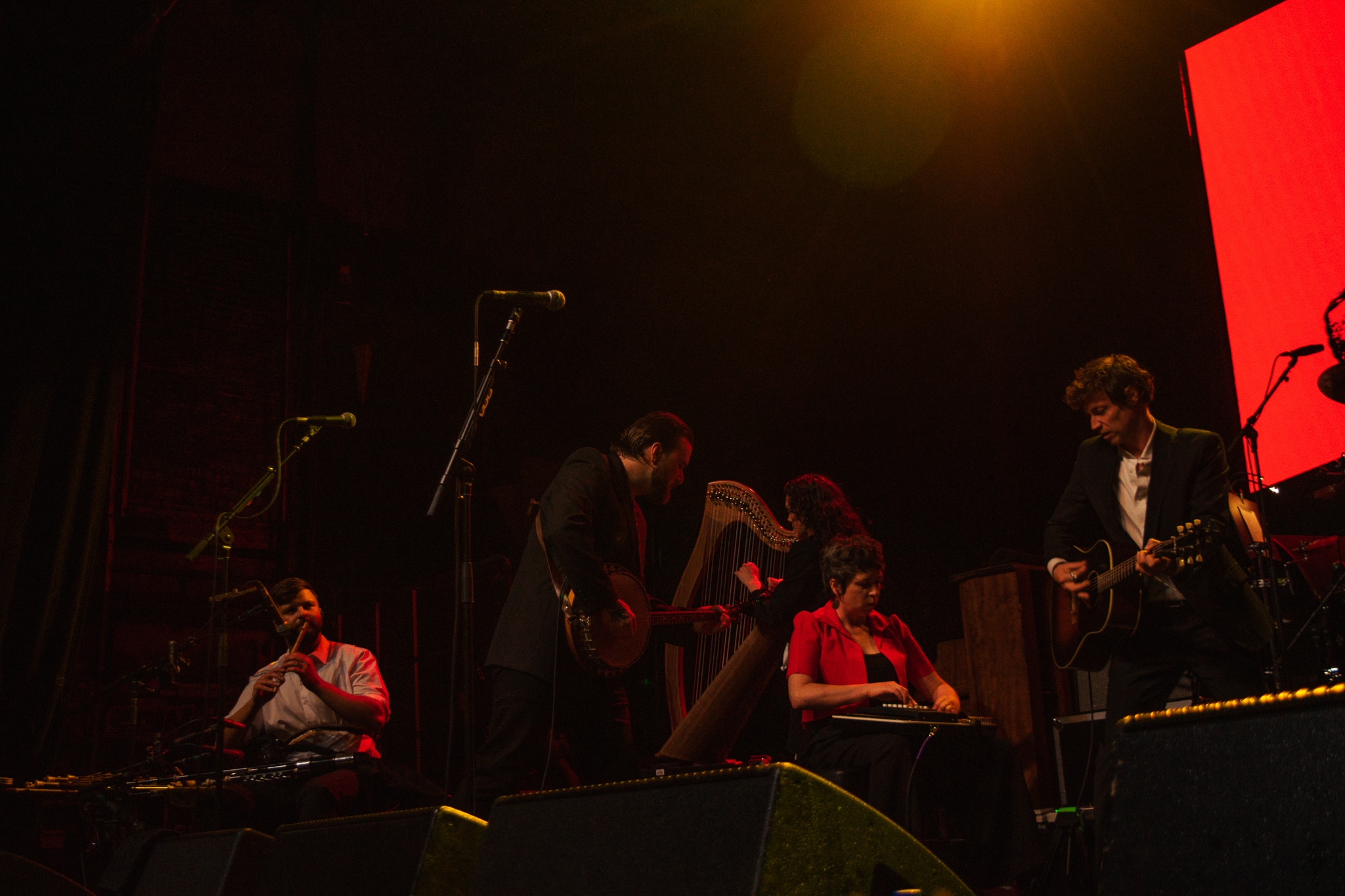
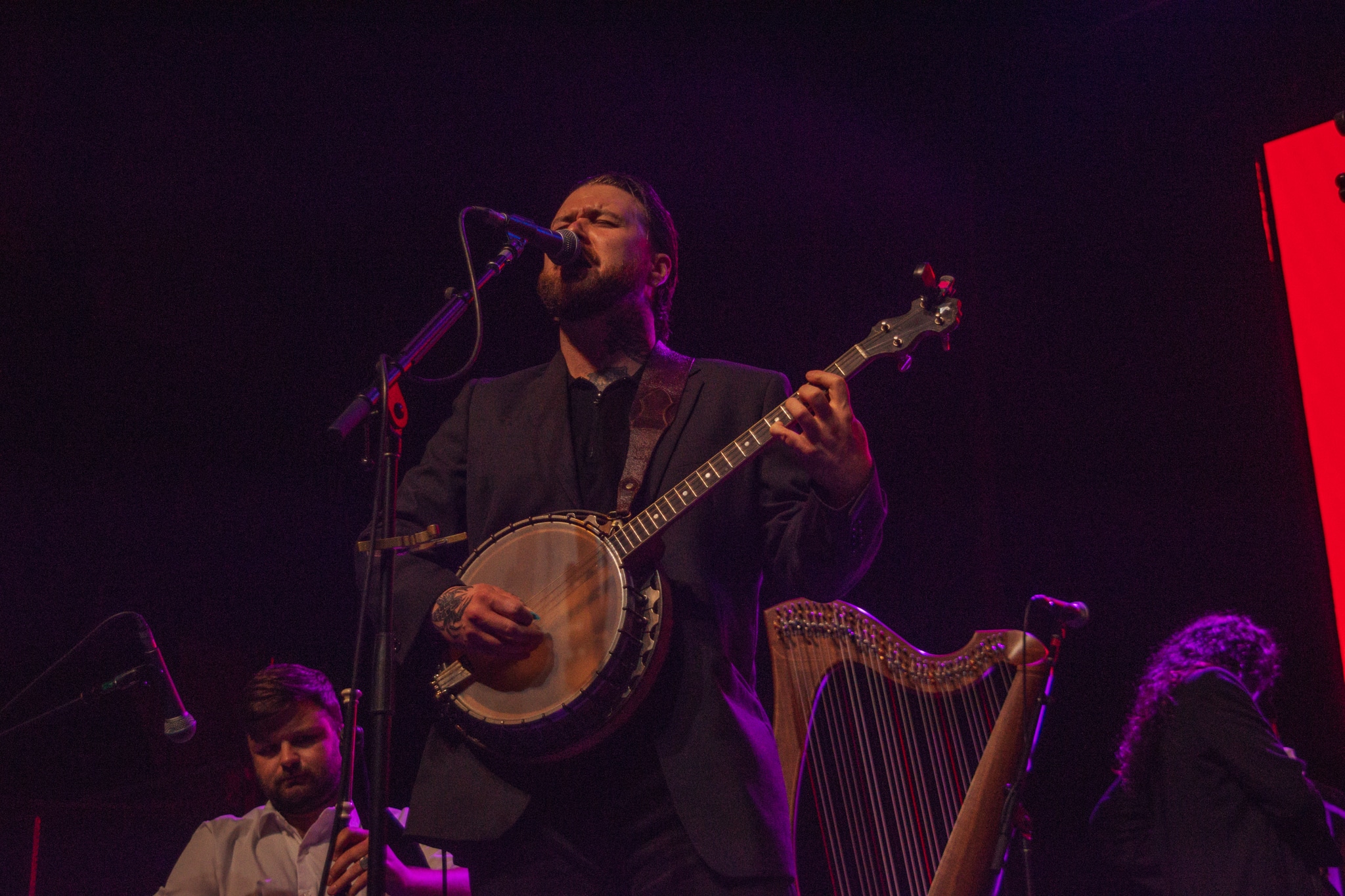
The stage resembled a musical pawn shop explosion: mandolins, banjos, accordion, tin flutes, and enough brass instruments to outfit a small army. When sixteen musicians finally assembled for opener “The Sick Bed of Cúchulainn,” the visual impact was staggering before a single note rang out. This wasn’t just a band; it was a folk-punk militia ready for cultural warfare.
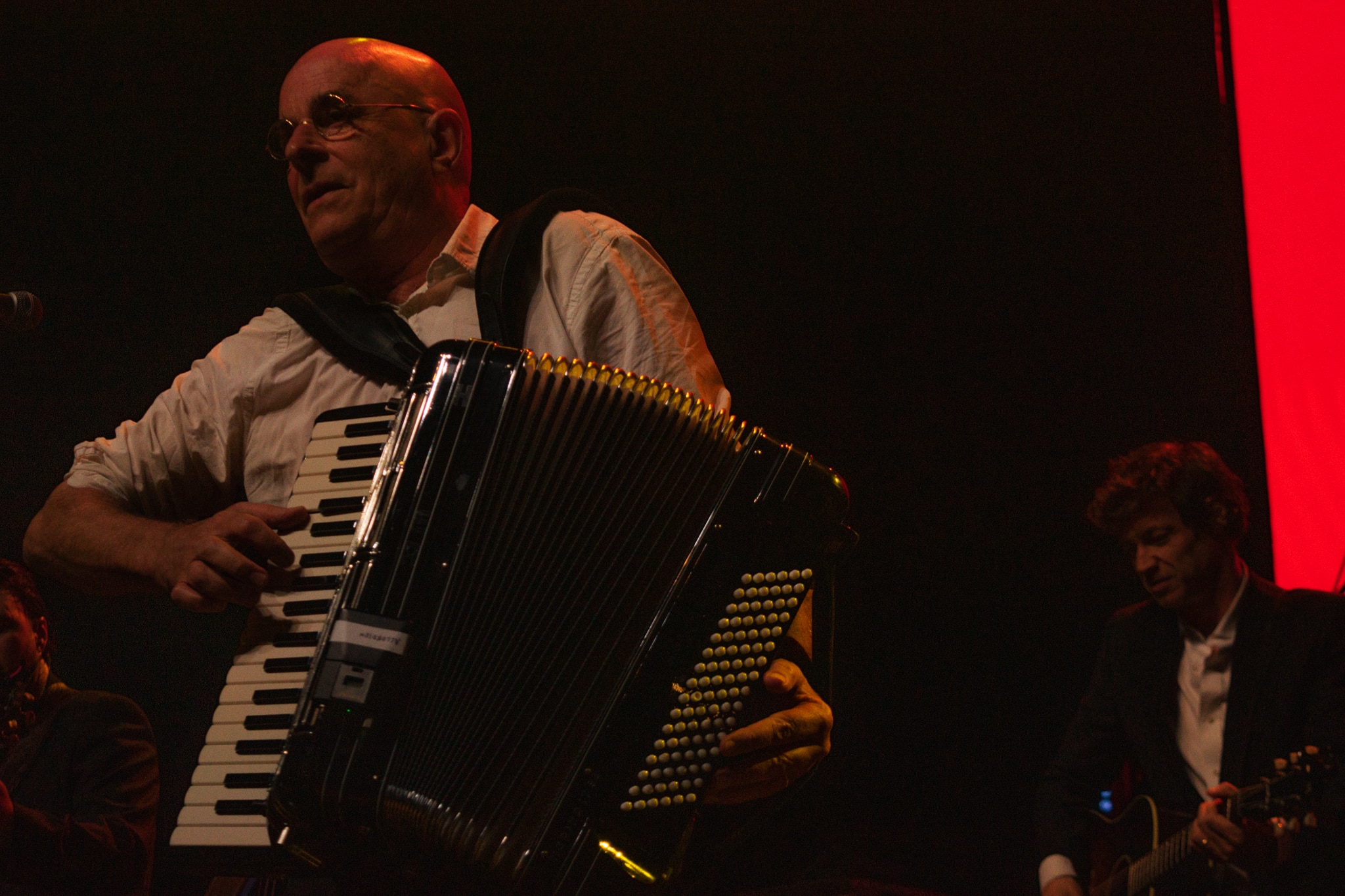
Core members Spider Stacy, James Fearnley, and Jem Finer anchored the sonic assault with the authority of generals who’ve fought these battles for decades. Stacy, freed from his usual tin flute duties by the presence of Fiachra Meek, prowled the stage with renewed vocal energy. Fearnley’s accordion wheezed and soared like a musical respiratory system, while Finer alternated between banjo and hurdy-gurdy with the casual expertise of someone juggling knives.
The supporting cast deserved equal billing. Bad Seeds drummer James Sclavunos provided the rhythmic backbone that kept this beautiful chaos from careening into actual anarchy. Glasgow’s Iona Zajac brought ethereal harp textures that somehow made perfect sense amid the controlled pandemonium, while Irish singer Lisa O’Neill handled the weight of MacGowan’s legacy with grace and fire.
Initially, the crowd seemed almost cautious, as if unsure whether they had permission to fully embrace the madness unfolding before them. Then something shifted—beer began arcing through the air, bodies pressed forward, and suddenly the entire floor transformed into a human ocean of pure kinetic joy. The Montreal audience, famous for their enthusiastic participation, didn’t disappoint, giving Stacy plenty of material for his between-song banter.
And what banter it was. Stacy’s attempts at French were endearing disasters, while his gentle provocations and bandmate ribbing kept energy levels pegged even during the inevitable technical delays. The road crew deserves hazard pay for navigating that instrumental obstacle course while keeping transitions relatively smooth.
The setlist balanced raucous pub anthems with moments of genuine poignancy. “And the Band Played Waltzing Matilda” carried the weight of history, while “A Pair of Brown Eyes” showcased the band’s ability to shift from chaos to contemplation without missing a beat. O’Neill and Zajac’s vocal contributions to “London Girl” were particularly inspired, bringing fresh perspective to familiar material while respecting its emotional core.
MacGowan’s absence loomed largest during “Rainy Night in Soho” and “The Old Main Drag,” songs so closely associated with his distinctive growl that hearing them performed by others felt both necessary and slightly unsettling. The band acknowledged their loss midway through the set with “The Parting Glass,” the traditional tune they performed at MacGowan’s funeral. The moment carried genuine emotion without descending into maudlin territory—exactly the kind of respectful irreverence MacGowan would have appreciated.
The evening’s structure felt less like a typical concert and more like a proper Irish wake: equal parts celebration and mourning, with the emphasis firmly on celebration. Each band member brought personal flair to material closely associated with MacGowan’s signature snarl, proving that great songs can survive the loss of their original interpreter when handled with sufficient respect and passion.
The five-song encore built to a crescendo that left the venue feeling like a ship’s deck after a successful raid. “Streams of Whiskey” and “Sally MacLennane” sent the crowd into final frenzied singalongs, voices hoarse from two hours of communal catharsis. People stumbled toward the exits looking simultaneously exhausted and exhilarated, as if they’d survived something genuinely transformative.
What struck me most was how The Pogues managed to honour their fallen leader while asserting their continued relevance as a creative force. This tour, ostensibly celebrating the 40th anniversary of “Rum, Sodomy & The Lash,” functioned as both tribute and declaration of independence. MacGowan’s songwriting genius provided the foundation, but the band’s current lineup brought enough personality and skill to make these songs feel alive rather than embalmed.
The Pogues have always been about controlled chaos, about finding beauty in disorder and dignity in defiance. Friday night’s performance proved that ethos survives even profound loss. They remain pirates of the highest order, still capable of transforming any venue into their personal ship of fools.
It was clear The Pogues had accomplished something remarkable: they’d thrown a wake that felt like a resurrection, proving that true punk spirit transcends any single performer. MacGowan would have been proud of the beautiful mayhem his bandmates conjured in his honour.
Review & Photos – Maggie Rossy-Aulman
Share this :


